
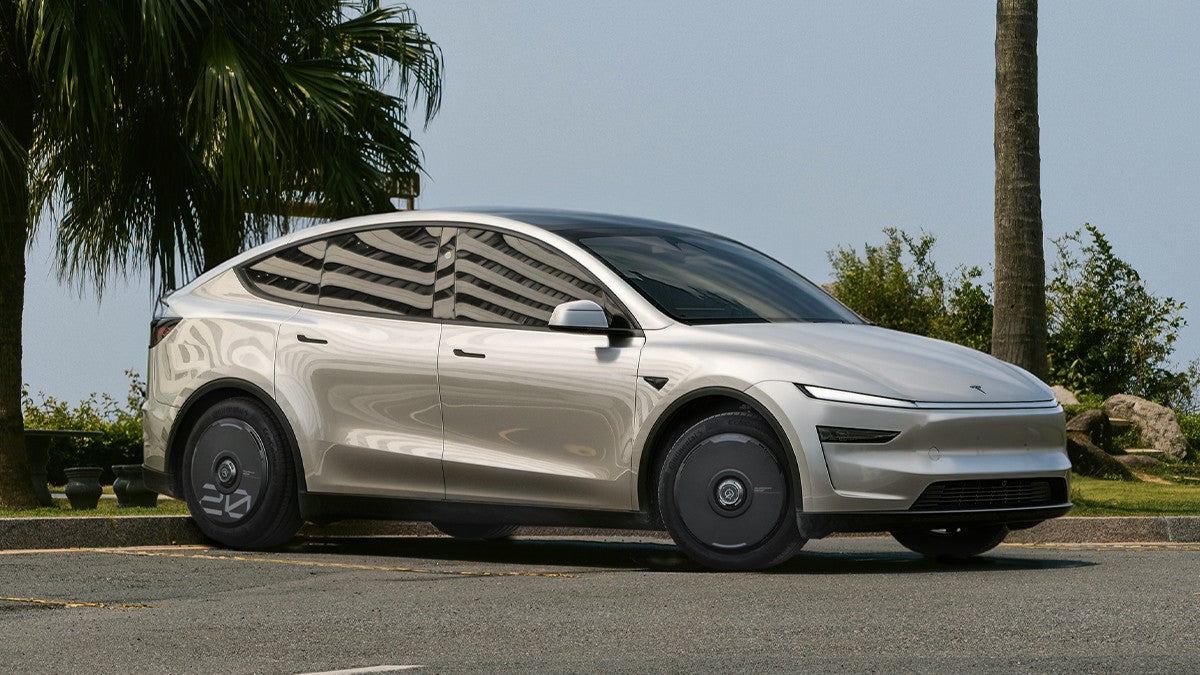
If you own a Tesla Model 3, you have probably looked at the factory wheels at some point and wondered: Do the hubcaps actually help efficiency, or are they mostly there for looks?
It is a fair question.
Plenty of Tesla owners prefer the appearance of the exposed alloy wheels. Others keep their aero wheel covers installed because they like the cleaner design, want more protection from road debris, or simply do not want to give up any potential efficiency gain.
So when comparing Tesla Model 3 hubcaps on vs off, the difference is not just cosmetic.
Wheel covers can influence how air moves around the wheels, especially at higher speeds. But the real-world difference depends on your speed, tires, route, weather, wheel design, and driving habits.
Here is what actually matters before you decide whether to keep the covers on or pull them off.
Quick Answer: Are Tesla Model 3 Hubcaps More Efficient When Installed?
In general, aero wheel covers can improve aerodynamic efficiency compared with driving on more open wheel designs.
The reason is simple: wheels are messy from an airflow perspective.
As the wheel spins, the spokes, tire, wheel well, and surrounding bodywork disturb the air. A relatively smooth aero wheel cover can reduce some of that turbulence and drag.
That does not mean every driver will suddenly see a dramatic increase in Tesla's range.
At low city speeds, the difference may be difficult to notice. At sustained highway speeds, aerodynamics play a much larger role, so the effect of an aero wheel design becomes more relevant.
A good way to think about it is:
|
Driving Situation |
Hubcaps On |
Hubcaps Off |
|---|---|---|
|
City driving |
Small efficiency difference |
Usually small difference |
|
Highway driving |
Better aerodynamic potential |
More exposed wheel turbulence |
|
Long trips |
Can help preserve a bit of extra efficiency |
May use slightly more energy |
|
Wheel protection |
More coverage |
Alloy wheel more exposed |
|
Cleaning |
Cover catches some road grime |
Wheel spokes need direct cleaning |
|
Appearance |
Smooth aero style |
Exposed factory wheel look |
|
Curb protection |
Depends on cover design and coverage |
Rim edge fully exposed |
For many owners, the bigger question is not whether the covers work at all. It is whether the extra efficiency and protection are worth the appearance trade-off.
Why Wheel Covers Affect Tesla Model 3 Efficiency
A moving car has to push through air.
The faster you drive, the more energy is required to overcome aerodynamic drag. That is why efficiency changes that seem tiny around town can become more interesting during long trips at higher speeds.
The wheels are especially important because they are rotating surfaces exposed directly to moving air.
An uncovered alloy wheel has:
- Open spokes
- Recessed surfaces
- Lug nuts
- A center area
- Multiple edges that interact with airflow
Each of these areas can create turbulence.
An aero wheel cover creates a flatter surface over much of the wheel. Instead of air constantly moving in and out through the spokes, more of it can continue across the wheel face.
That is the basic aerodynamic principle behind Tesla wheel covers.
It is not magic. It is simply an attempt to make the wheel a little less disruptive to the air flowing around the car.
Tesla Model 3 Hubcaps On vs Off: Where Will You Notice the Difference?
The biggest variable is usually speed.
Around Town
If most of your driving is between traffic lights, parking lots, local roads, and short commutes, you may not notice much difference in energy consumption.
Aerodynamic drag matters less at lower speeds.
Your acceleration, climate control, elevation changes, temperature, tire pressure, and traffic can easily have a bigger effect than whether your aero covers are installed.
For a city driver, the reasons to keep wheel covers installed may have more to do with:
- Wheel protection
- Style
- Keeping brake dust and road grime away from some wheel surfaces
- Covering existing curb rash
- Changing the wheels' appearance without replacing the rims
On the Highway
This is where the conversation becomes more interesting.
At higher speeds, aerodynamic resistance increases quickly. The wheel design therefore becomes more important.
With aero covers installed, airflow around the wheel can be cleaner than it is over exposed spokes.
That can translate into an efficiency gain, although the exact amount is not fixed.
Two drivers testing the same Tesla Model 3 can get different results simply because one test had stronger wind, different tires, different traffic, or slightly different speed.
That is why you should be careful with any video claiming a universal percentage improvement.
The useful takeaway is simpler:
Aero covers generally make more aerodynamic sense at highway speed than they do during low-speed city driving.
How Much Extra Range Can Wheel Covers Really Add?
This is where people sometimes get carried away.
You may see test data, owner videos, forum posts, and individual comparisons showing noticeable differences between wheel covers on and off.
Some tests look impressive. Others show only a small efficiency gain.
That variation is normal.
Efficiency depends on:
- Vehicle configuration
- Wheel size
- Tire type
- Tire pressure
- Average speed
- Wind speed and direction
- Temperature
- Road surface
- Elevation
- Traffic
- HVAC use
- Driver behavior
Even two runs on the same road can produce different results.
So instead of asking, “Exactly how many miles will my hubcaps add?”, a better question is:
“Do I regularly drive in conditions where improved aerodynamics matter?”
If you spend a lot of time at highway speed or take frequent long trips, keeping an aerodynamic cover installed makes more sense.
If almost all of your driving is low-speed city travel, the efficiency difference may be much less important than style and wheel protection.
Why Some Tesla Owners Remove the Aero Covers
Efficiency is only one part of the decision.
A lot of Tesla owners simply prefer the appearance of the original wheels underneath.
Pull off the stock covers and you get a more traditional alloy-wheel look. Add center caps and lug nut covers, and the exposed wheel can look much more complete.
For some drivers, that style difference is worth giving up a bit of aerodynamic efficiency.
And that is completely understandable.
Tesla's factory aero setup is designed around function, but not every owner loves the appearance. Some people think the stock covers look too plain. Others might even call them ugly.
The uncovered rims can give the Model 3 a sportier appearance without requiring an expensive wheel upgrade.
The trade-off is that the original wheels are now exposed to:
- Road debris
- Brake dust
- Road grime
- Scratches
- Parking damage
- Curb rash
Regular cleaning also becomes more important because the spokes and inner wheel surfaces are visible.
The Problem With Driving With Completely Exposed Wheels
Once the stock covers are removed, the alloy wheels become part of the car's appearance.
That sounds obvious, but it changes how you think about everyday driving.
One bad parking angle can leave curb rash along the rim edge.
It is kinda frustrating because the actual wheel may still perform perfectly, yet a small scratch can make a nearly new Model 3 look older than it really is.
This is one reason aftermarket wheel covers have become popular with owners who want something different from Tesla's stock covers.
Instead of choosing between:
factory aero cover
or
completely exposed factory wheel
you can choose a third option.
Aftermarket Wheel Covers Can Balance Style, Protection, and Aero
A well-designed aftermarket wheel cover can change the appearance of the Model 3 while keeping more of the wheel covered.
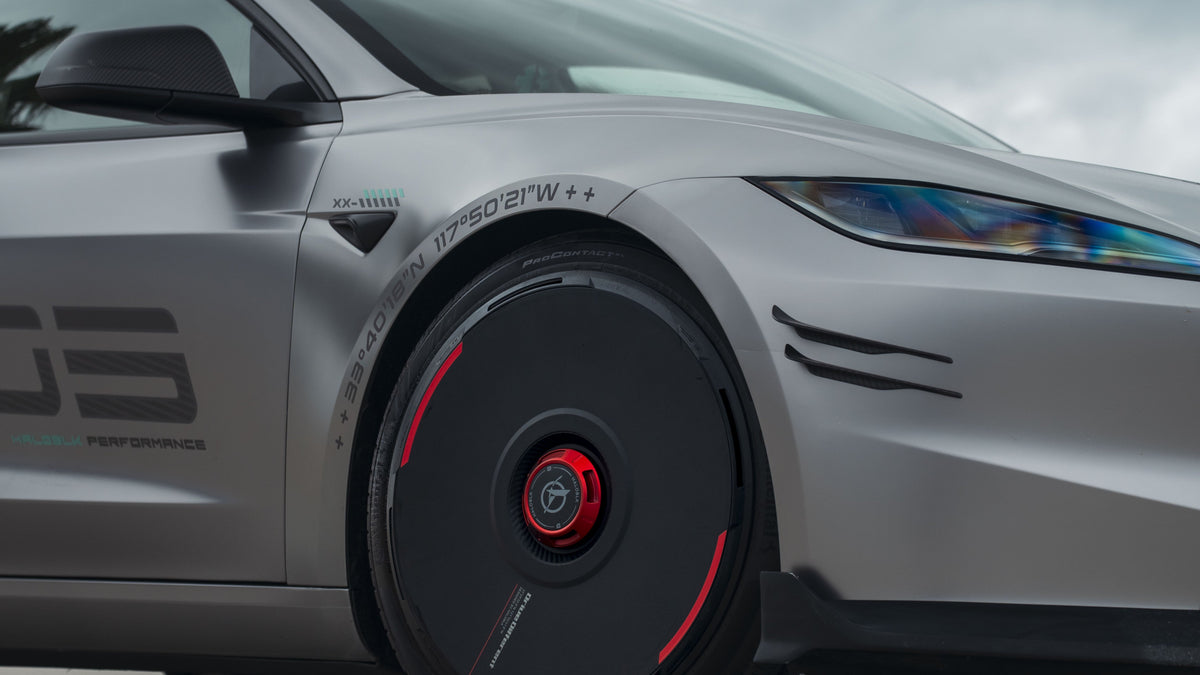
That is the idea behind HALOBLK's HALODISC 2 wheel-cover designs.
Rather than treating the wheel cover as something you simply tolerate for efficiency, HALOBLK approaches it as a visible exterior accessory.
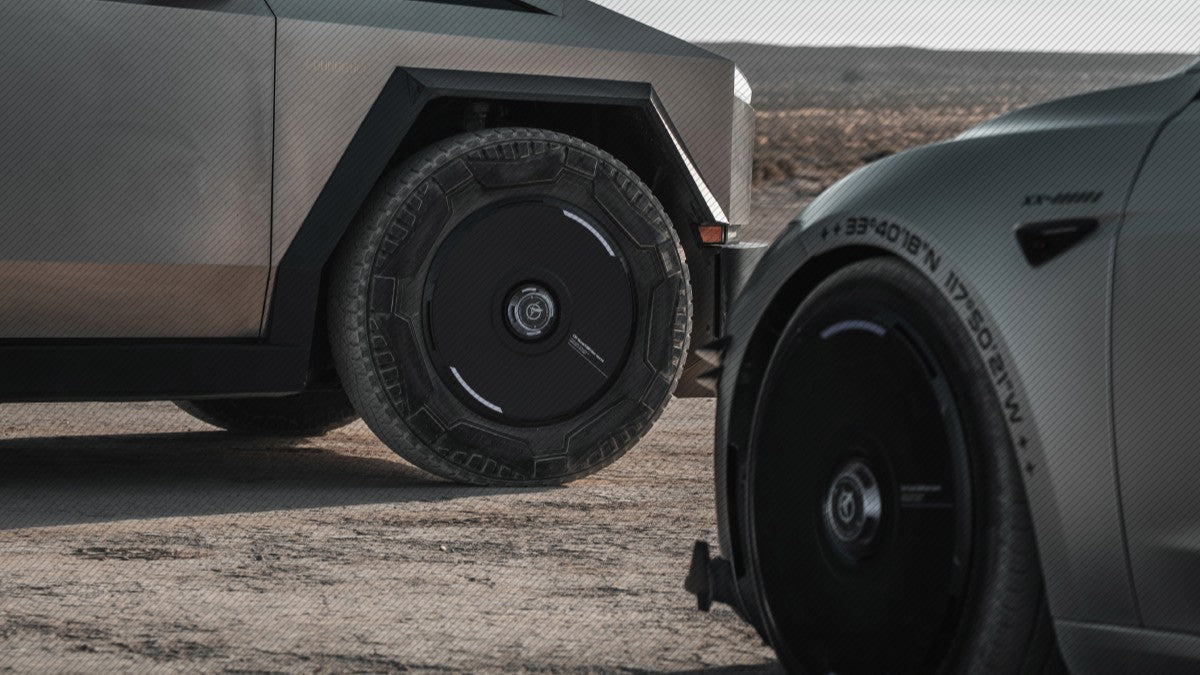
Different HALODISC styles can give the car a more aggressive, futuristic, or personalized appearance while still keeping the wheel face covered.
Options across the HALOBLK lineup include designs such as RTP, Charging, Cyber Track, Supercharger, Arrow, and custom-number styles.
This makes sense for Tesla owners who like the benefits of a wheel cover but do not necessarily love the look of the factory covers.
You can keep the idea of a smoother wheel surface while giving the car a much more distinctive style.
Don't Forget Rim Protection
This is one area where wheel covers can provide value even if you never calculate the efficiency difference.
Tesla wheels are easy to notice—and unfortunately, curb rash is easy to notice too.
A fuller-coverage wheel-cover design can act as a shield between part of the factory wheel and everyday contact, scratches, grime, and light scuffs.
That does not mean a wheel cover makes your wheel invincible.
A hard curb impact can still damage the cover, wheel, tire, or suspension. Wheel covers should never be treated as crash protection.
But for normal ownership, having a replaceable cover take some cosmetic wear can make more sense than exposing an expensive alloy wheel every day.
That is especially relevant for:
- City owners
- Drivers using tight parking garages
- People who parallel park regularly
- Rideshare drivers
- High-mileage commuters
- Leased vehicles
- Owners who care about resale appearance
Sometimes the best efficiency upgrade is only a few percent.
Avoiding an ugly scrape on the original wheel can feel much more valuable.
Stock Covers vs Aftermarket Covers vs No Covers
There is no single correct setup for every Tesla owner.
Keep the Factory Aero Covers If…
The stock covers make sense if your main priorities are efficiency, simplicity, and factory design.
You already own them, they were engineered around the factory wheel, and there is nothing else you need to buy.
For a driver who does a lot of highway miles and does not care much about changing the wheels' appearance, there may be little reason to remove them.
Remove the Covers If…
Driving without wheel covers makes sense if appearance matters more to you than maximizing aero efficiency.
The exposed alloy wheels can look cleaner and more traditional, especially when paired with center caps and lug nut covers.
Just remember that the rims are also more exposed.
Switch to Aftermarket Wheel Covers If…
Aftermarket covers make sense when you want something between those two options.
You want:
- A different style
- More wheel coverage
- Aero-inspired wheel design
- A reversible upgrade
- No need to replace the actual wheels
- A lower-cost visual change than buying a completely new wheel and tire setup
For many owners, that is the sweet spot.
What About Weight?
People sometimes worry that installing wheel covers adds weight and cancels out the aerodynamic advantage.
For normal driving, the relatively small weight of a lightweight wheel cover is generally far less important than the aerodynamic behavior of the wheel at highway speeds.
That does not mean weight is irrelevant.
It simply means you should not look at one variable in isolation.
Vehicle efficiency is the result of many factors working together:
drag + tires + weight + speed + weather + driving style + temperature + road conditions.
Changing the wheel surface influences only part of that equation.
Can Wheel Covers Hurt Performance?
When the cover is designed for the correct wheel and installed properly, normal driving performance should remain the priority.
The key phrase is installed properly.
Never assume that every cover fits every Tesla wheel.
Before installing any aftermarket covers, verify:
- Your exact Tesla Model 3 generation
- Factory wheel size
- Factory wheel design
- The cover's specified compatibility
- Attachment clips or locking system
- Tire valve access
- Installation instructions
After installation, check that every cover is fully seated and secure before driving.
If you hear unexpected rubbing, clicking, or movement, stop and inspect the installation rather than ignoring it.
Safety matters more than a tiny efficiency difference.
Should You Remove Aero Covers for Regular Cleaning?
You should inspect and clean both the wheel covers and the wheel underneath periodically.
Road grime, brake dust, small stones, and dirt can collect around the contact points over time.
Regular cleaning gives you a chance to inspect:
- Clips
- Locking components
- Wheel surface
- Tire condition
- Valve access
- Any signs of rubbing
It is also smart to check the covers after tire service, wheel rotation, or any time they have been removed and reinstalled.
Do not just install a set and forget about it for years.
So, Are Tesla Model 3 Hubcaps Worth Keeping On?
For many drivers, yes.
If you care about aerodynamic efficiency, do a lot of highway driving, take long trips, or simply want the wheel protected, keeping some form of wheel cover installed makes sense.
If you absolutely love the appearance of the exposed original wheels, removing the covers is also a perfectly reasonable choice.
You are simply making a different trade-off.
The decision looks something like this:
Maximum factory simplicity:
Keep the stock aero covers.
Maximum exposed-wheel appearance:
Remove the covers and use center caps.
Style + coverage + aero-inspired design:
Switch to a well-fitted aftermarket wheel cover.
That last option is where products such as HALODISC 2 become interesting.
You do not have to choose between a wheel cover you do not like and spending serious money replacing perfectly good wheels.
A Better Way to Think About the Upgrade
It can feel a bit crazy to replace an entire set of wheels just because you want your Model 3 to look different.
The original wheels already work.
The tires are already installed.
The car already rides the way you like.
A wheel-cover upgrade changes the part you actually see.
That is why it makes sense for drivers who want a noticeable visual upgrade without turning the project into a full wheel-and-tire replacement.
And if the new design also gives you more wheel coverage and better aerodynamic potential, those are useful bonuses.
FAQ: Tesla Model 3 Hubcaps On vs Off
Do Tesla Model 3 aero covers really improve efficiency?
They can improve aerodynamic efficiency by smoothing airflow around the wheel. The actual difference varies with speed, weather, tires, route, and driving conditions, and is generally more relevant at highway speeds.
Is it safe to drive a Tesla Model 3 without wheel covers?
Yes, assuming you are simply removing a compatible removable factory wheel cover and the underlying wheel is intended to be driven exposed. Many owners add center caps and lug nut covers to create a more finished appearance.
Will removing the hubcaps reduce Tesla's range?
Potentially. Exposed wheel spokes generally create more aerodynamic disturbance than a smooth aero-style cover. The real-world range difference varies and may be difficult to notice in low-speed driving.
Do aftermarket wheel covers improve efficiency?
Aero-oriented aftermarket wheel covers may reduce wheel-related drag compared with more open wheel designs, but performance depends on the design, fit, vehicle, speed, tires, and testing conditions. Avoid assuming any fixed percentage improvement without controlled test data.
Are wheel covers useful for protecting Tesla wheels?
Fuller-coverage designs can help shield portions of the wheel from road grime, light scratches, and everyday cosmetic wear. They are not a guarantee against serious curb impacts or wheel damage.
Should I buy new wheels or wheel covers?
If your current wheels and tires are in good condition and you mainly want a new appearance, wheel covers are usually the simpler and less expensive upgrade. New wheels make more sense when you specifically want to change wheel size, weight, tire setup, or performance characteristics.
How do I choose the correct HALOBLK wheel covers?
Match the product to your exact Tesla Model 3 generation, factory wheel size, and wheel design. Do not buy based only on “fits Model 3.” Correct fitment is essential for secure installation and everyday driving.
The Bottom Line
The Tesla Model 3 hubcaps on vs off debate does not have to end with one side being right.
With the covers on, you get a smoother wheel surface, more aerodynamic potential, and additional wheel coverage.
With the covers off, you get the exposed alloy-wheel appearance many owners prefer.
The right choice depends on what you care about most.
But there is also a third option.
If you like the efficiency logic of an aero wheel cover but want something that feels less factory and more personal, a HALOBLK HALODISC 2 setup can give your Model 3 a completely different look without replacing the wheels underneath.
Your wheels are already doing their job. Maybe they just need a better outfit.
Explore the HALOBLK wheel-cover styles that match your exact Model 3 wheel setup, choose the look that fits your car, and turn the next time you walk toward your Tesla into the moment you notice the wheels first.

Leave a comment
All comments are moderated before being published.
This site is protected by hCaptcha and the hCaptcha Privacy Policy and Terms of Service apply.