
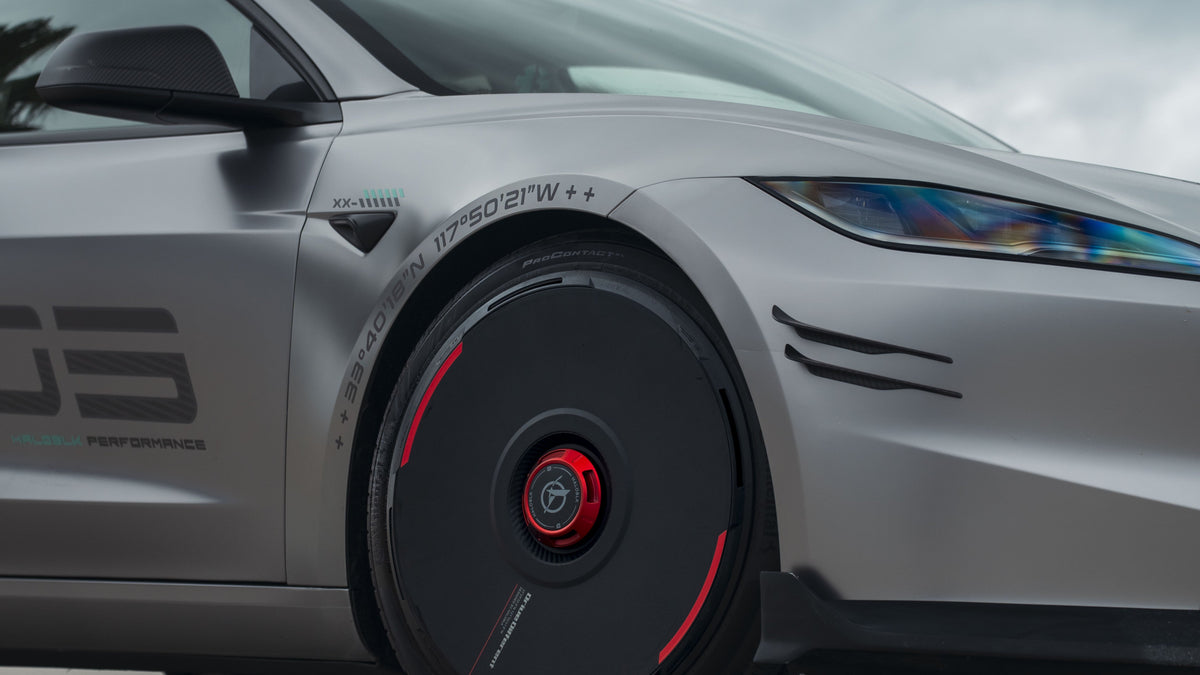
If you're comparing Tesla Model 3 Photon wheel covers vs aftermarket hubcaps, you're probably trying to answer a fairly simple question: should you stay with the factory look, or can an aftermarket set give you more style and protection without sacrificing too much efficiency?
For many Tesla owners, the answer depends less on the Tesla logo on the center cap and more on four practical things: fit, coverage, aerodynamics, and appearance.
Tesla's factory covers are designed around the original wheels and offer a clean, efficient look. Aftermarket wheel covers, meanwhile, can provide more customization, better rim-edge coverage, and often a much lower cost for a full set.
Neither option is automatically better for everyone.
Here's how they compare in everyday Model 3 ownership.
Quick Answer: Photon Wheel Covers or Aftermarket Hubcaps?
If you prefer a factory appearance, predictable fit, and OEM simplicity, Tesla Photon wheel covers make sense.
If you want more protection against curb rash, more design choices, and a lower-cost way to change your car's appearance, a good-quality aftermarket wheel cover may offer better value.
The important detail is that not every aftermarket cover is built the same way.
Fit quality, clips, material, wheel surface coverage, and aerodynamic design can vary significantly. A well-designed full-coverage set can look secure and modern, while a poorly fitting set may create noise, vibration, or even a small efficiency penalty at highway speed.
What Are Tesla Model 3 Photon Wheel Covers?
Photon wheel covers are factory Tesla wheel covers designed for certain Model 3 wheel configurations.
Their main function is similar to other Tesla aero covers: they create a smoother wheel surface compared with leaving the alloy wheels completely exposed.
That smoother surface can help reduce drag and wind resistance around the car wheels.
Tesla aero-style wheel covers have historically been associated with approximately 3–5% better range under favorable conditions, particularly during highway driving where aerodynamics matter more.
The exact difference depends on the vehicle, wheel size, tire pressure, speed, weather, and driving style.
The factory covers also maintain the clean, sleek appearance Tesla owners expect from the Model 3.
For someone who likes the OEM look, they simply work.
What Are Aftermarket Hubcaps?
The word hubcaps gets used pretty loosely in the Tesla accessories market.
Traditionally, hub caps cover only the center portion of a wheel. A true hub cap does not protect the entire rim.
Many products sold today as "Tesla hubcaps," however, are actually full wheel covers. They extend across most or all of the wheel surface and provide much more coverage.
That difference matters.
A small hub cap mainly changes the center area around the lug nuts.
A full-coverage aftermarket wheel cover can cover the spokes, center caps, and outer sections of the original wheels.
For Tesla owners worried about scratches, dirt, or road debris, full coverage makes considerably more sense.
Tesla Model 3 Photon Wheel Covers vs Aftermarket Hubcaps: Key Differences
|
Feature |
Tesla Photon Wheel Covers |
Aftermarket Wheel Covers / Hubcaps |
|---|---|---|
|
Fit |
Factory-designed fit |
Depends heavily on brand and design |
|
Appearance |
OEM, clean, traditional |
Wide range of sporty and modern styles |
|
Rim protection |
Moderate |
Often better with full coverage |
|
Aerodynamics |
Factory aero design |
Varies by cover design |
|
Range benefit |
Potential 3–5% under suitable conditions |
Can improve efficiency, but results vary |
|
Material |
Factory specification |
Often high-quality ABS material |
|
Installation |
Straightforward |
Usually tool-free |
|
Customization |
Limited |
Much wider choice |
|
Replacement cost |
About $60 each as a general reference |
Roughly $75–$220 for many full sets |
|
Curb rash coverage |
Some protection |
Full-coverage designs may protect more of the rim |
Prices vary by date, seller, wheel size, and exact model compatibility, but the difference in buying structure is worth noticing.
Replacing one factory cover may be economical.
Replacing or upgrading all four wheels with aftermarket covers often gives customers much more visual change for the money.
Protection Is Where Full-Coverage Aftermarket Covers Stand Out
One reason many Tesla owners shop for wheel covers has nothing to do with aerodynamics.
It's curb rash.
The wheel and tire design on a Tesla can leave the rim relatively exposed during tight parking. A small mistake beside a curb can leave visible scratches around the edge of the original wheels.
A full-coverage wheel cover creates another barrier between the rim and everyday road hazards.
It can help protect against:
- Minor curb scratches
- Road debris
- Dirt and road grime
- Light surface wear
- Small cosmetic scuffs
Many aftermarket wheel covers are intentionally designed with curb rash protection in mind.
They won't make the wheel indestructible, and a hard curb strike can still cause damage, but replacing a damaged cover is generally easier than repairing or replacing an alloy rim.
That's especially useful for city drivers, new Tesla owners, and anyone who parks frequently in tight spaces.
Wheel Covers Can Also Hide Existing Wheel Wear
There's another practical advantage that often gets overlooked.
If your Model 3's original wheels already have scratches or small areas of curb rash, a full-coverage design can conceal much of that wear.
Instead of immediately refinishing the rims, you can change the appearance of the entire wheel.
For an older Model 3, this can make the car look surprisingly different without replacing the original wheels.
A fresh wheel design often changes the side profile of the vehicle more than smaller accessories do.
It's one of the reasons wheel covers remain one of the more economical exterior upgrades available for a Tesla.
How Do Photon Covers and Aftermarket Covers Compare for Aerodynamics?
This is where the answer becomes more nuanced.
Tesla factory aero covers are designed to smooth airflow around the wheel and reduce aerodynamic drag.
At highway speed, this matters because the car uses more energy pushing through the air.
Reducing turbulence around the wheels can help improve mileage efficiency and maintain more consistent highway efficiency.
That's one reason Tesla's aero-style wheel covers may contribute to a 3–5% range improvement compared with certain exposed-wheel configurations.
But that does not mean every aftermarket cover automatically delivers the same performance.
Aftermarket Aerodynamic Performance Depends on Design
The aerodynamic efficiency of aftermarket hubcaps can vary significantly.
A smooth, relatively enclosed wheel design may help reduce air movement through the spokes.
A very open or decorative design may prioritize aesthetics instead.
Poorly fitted covers can also disturb airflow rather than improve it.
In some cases, an aftermarket design that is less aerodynamic than the factory cover could lead to a minor drop in highway efficiency.
That's why the better question isn't:
"Are aftermarket hubcaps aerodynamic?"
It's:
"Was this specific wheel cover designed with airflow, fit, and wheel coverage in mind?"
That distinction matters much more.
Why Wheel Surface Design Makes a Difference
When a wheel spins at speed, air interacts with the spokes, rim, tire, and wheel well.
Open wheel designs allow more air to move into and around the wheel.
This can create turbulence.
A smoother wheel surface makes it easier for air to travel around the side of the vehicle rather than repeatedly passing through the spokes.
Less turbulent airflow can mean less drag.
And less drag means the car requires slightly less energy to maintain the same speed.
The change may be difficult to notice during a short drive around town.
On a long highway trip, the difference can become more meaningful.
What About HALOBLK Wheel Covers?
For Model 3 owners who like the idea of an aftermarket upgrade but don't want the wheels to look generic, HALOBLK's approach is worth considering.
The HALOBLK HALODISC 2 line is designed around a full-coverage concept rather than simply changing the center cap.
That means the cover can do several jobs at once:
Change the car's appearance.
A larger wheel surface gives the design much more visual impact than a small hub cap.
Help protect the original wheels.
Full coverage can add a barrier against everyday scratches, scuffs, and road debris.
Maintain an aero-inspired profile.
A smoother wheel face is better aligned with aerodynamic thinking than a highly exposed spoke pattern.
Keep the upgrade reversible.
You still retain the original Tesla wheels underneath.
HALOBLK also offers different visual directions such as RTP, Cyber Track, Charging, Supercharger, Arrow, and Custom Number designs, making it easier to match the covers to the personality of the car.
Some styles create a more sporty appearance.
Others lean into a futuristic Tesla aesthetic.
For owners who think factory Photon wheels look a little too traditional, this kind of customization can make the Model 3 feel more personal without replacing the wheels themselves.
Aftermarket Covers Can Create a Sportier Look
Style is one of the biggest reasons owners move away from factory covers.
The Model 3 has a clean design, but because so many cars share similar factory wheels, changing the wheel appearance can make a big visual difference.
Aftermarket covers can create:
- A turbine-inspired appearance
- A more aggressive performance look
- A futuristic full-disc design
- A darker, more modern side profile
- A custom-number or themed design
- A cleaner full-wheel appearance
Uberturbine-style and similar sporty designs remain popular because they give standard Model 3 wheels some of the visual character associated with more performance-focused wheels.
You get the appearance without necessarily adding the cost, weight, or complexity of an entirely new wheel and tire setup.
Material Quality Matters
A wheel cover lives in a fairly harsh environment.
It has to deal with:
- Rain
- Heat
- Road grime
- Brake dust
- Small impacts
- Road debris
- Repeated washing
- Highway speed
That's why material is important.
Many better aftermarket covers use high-quality ABS material because ABS can combine impact resistance, relatively low weight, and water resistance.
A good cover should feel solid without being unnecessarily heavy.
It should also resist ordinary weather exposure without becoming brittle too quickly.
Cheap material may look acceptable when new but can become a durability problem over time.
When comparing covers, don't focus only on the photo.
Look at the material, clips, center attachment, customer reviews, and fitment information.
Fit Is More Important Than Style
A wheel cover can look cool on the product page and still be a bad purchase if it doesn't fit correctly.
The best aftermarket cover should feel secure once installed.
Before buying, confirm:
- Tesla model
- Model year
- Wheel size
- Factory wheel design
- Tire valve location
- Clip design
- Center attachment
- Any fitment exclusions
A perfect fit is important for appearance, security, and aerodynamics.
If the cover moves around, sits unevenly, or leaves unexpected gaps, the result won't look right and may not perform correctly at speed.
This is one reason Tesla-specific accessories generally make more sense than universal covers.
They are designed around the actual car wheels rather than trying to fit dozens of unrelated vehicles.
How to Install Aftermarket Tesla Wheel Covers
Installation is usually simple and should not require any additional tools.
The exact process depends on the cover design, so always follow the product instructions, but a typical installation looks like this.
1. Clean the wheels
Start with a clean wheel surface.
Remove dirt, sand, and road debris before installing the covers. This reduces the chance of trapped dirt rubbing against the rim.
2. Add protective foam strips if provided
Some designs include foam strips.
These should be placed between the wheel and cover in the recommended locations to reduce contact and help protect the finish.
3. Find the tire valve
Locate the valve stem on the wheel.
Align the cover's valve hole with the tire valve before pressing the cover into place.
This makes checking or adjusting tire pressure much easier later.
4. Align the cover carefully
Check that the center and outer clips line up correctly.
Don't force the cover if the alignment clearly looks wrong.
5. Press the cover into position
Many covers attach by pressing from the top toward the bottom until the clips engage with the rim.
Apply even pressure rather than hitting one area aggressively.
6. Check security
Once installed, gently pull around different areas of the cover.
It should feel secure.
Check the center as well if the product uses a center-lock or center-cap attachment.
Before your first highway drive, inspect all four covers again.
Which Option Is Easier to Maintain?
Both factory and aftermarket covers require basic maintenance.
Brake dust and road grime can collect around and behind the covers, so removing them occasionally is a good idea.
Clean both the cover and the original wheels underneath.
This also gives you a chance to check:
- Clips
- Foam strips
- Center caps
- Lug nuts
- Rim condition
- Valve access
- Cracks or damaged areas
Maintaining the covers helps preserve both appearance and functionality.
A secure, clean cover is also more likely to maintain its intended aerodynamic profile.
Photon Wheel Covers Make More Sense If...
Factory covers are probably the better choice if you:
- Prefer an OEM appearance
- Want factory fit with minimal decision-making
- Like the existing Photon wheel design
- Care more about factory functionality than customization
- Only need to replace one damaged cover
- Prefer keeping the Model 3 completely stock
There's nothing wrong with staying factory.
For many Tesla owners, simplicity is the whole point.
Aftermarket Wheel Covers Make More Sense If...
Aftermarket covers may be the better idea if you:
- Want more rim protection
- Frequently park close to curbs
- Want a sportier or more modern design
- Want to conceal scratches on existing wheels
- Prefer full coverage
- Want more personalization
- Don't want to replace expensive alloy wheels
- Want to experiment with the appearance of your Model 3
- Like the flexibility of removable accessories
They can be especially attractive for someone buying a used Model 3 where the original wheels already show normal wear.
Instead of replacing the rims, covers can refresh the entire side profile of the vehicle.
Cost: Factory Photon Covers vs Aftermarket Covers
Cost is another clear difference.
As a rough reference, a Tesla replacement Photon wheel cover may cost around $60 each, depending on availability and exact specification.
That puts four individual replacement covers around the same general territory as some aftermarket sets.
Full sets of aftermarket covers often range from approximately $75 to $220, depending on material, design, wheel size, attachment system, brand, and coverage.
Premium custom or specialty designs can cost more.
The cheaper product isn't automatically the better value.
What matters is what you're getting for the money.
Consider:
- Material quality
- Full rim coverage
- Durability
- Secure clips or locking system
- Fitment support
- Style options
- Easy returns
- Replacement parts
- Customer reviews
A low price doesn't help much if the cover rattles, doesn't match your wheel, or needs to be replaced after a short period.
What Should Range-Conscious Tesla Owners Choose?
If range and efficiency are your absolute priority, the safest choice is usually the factory aero configuration because it was designed around the vehicle.
But if you prefer an aftermarket design, that doesn't automatically mean giving up efficiency.
Look for a wheel cover with:
- A relatively smooth outer surface
- Secure fit
- Minimal unnecessary openings
- Full or near-full wheel coverage
- Low weight
- Model-specific design
The closer the cover follows aerodynamic principles, the better the chance that it will maintain efficient airflow.
Still, don't expect a dramatic range transformation.
Wheel covers are one piece of a much larger efficiency equation.
Tire pressure, temperature, speed, driving behavior, wind, and tire choice can all have a bigger impact.

Featured Tesla Upgrade
HALODISC 2 RTP – Black
From $219 $229
Give your Tesla a cleaner, more distinctive side profile while helping protect the original wheels from everyday curb rash and scratches. Select your Tesla model and wheel size below.
- ✓ Secure center-lock installation
- ✓ Full-rim curb rash protection
- ✓ Set of four wheel covers
- ✓ Fast US shipping on eligible fitments
Not compatible with the 2026 Model 3 Standard 18-inch Prismata, 2026 Model Y Juniper Standard 18-inch Aperture, or 2026 Model Y Juniper 21-inch Arachnid 2.0 wheels.


Leave a comment
All comments are moderated before being published.
This site is protected by hCaptcha and the hCaptcha Privacy Policy and Terms of Service apply.