
Tesla Model 3 wheel covers are often treated as a simple appearance upgrade, but their purpose goes beyond style. A properly designed set of aero wheel covers can manage airflow around the wheels, reduce wind resistance and help the vehicle use less energy at higher speeds.
In the aerodynamic test data examined for this guide, Tesla Model 3 aero covers reduced average energy consumption by 3.4 percent. The effect became more noticeable as speed increased, with the largest efficiency improvement recorded at 90 mph.
That does not mean every driver will gain exactly the same number of miles. Tire pressure, temperature, elevation, driving style and road conditions can all affect range. However, the results show why wheel design matters and why quality wheel covers remain one of the simplest aerodynamic upgrades available for the Tesla Model 3.
Do Tesla Model 3 Wheel Covers Really Improve Range?
Yes, well-designed Tesla Model 3 wheel covers can improve range by reducing aerodynamic drag around the wheels.
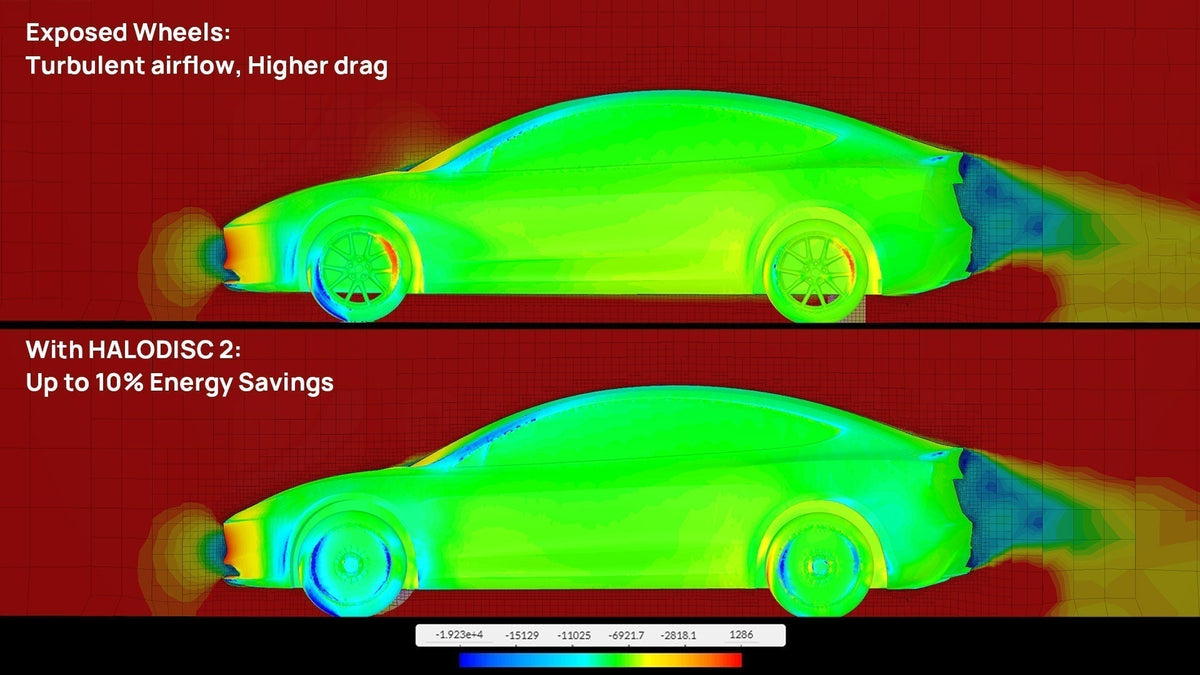
Open wheel designs create turbulence as the spokes rotate through the air. This disturbed airflow increases drag, particularly during sustained high-speed driving. Aero covers create a smoother surface over the wheel, allowing air to move around the side of the car with less resistance.
The efficiency gain may appear small as a percentage, but even a modest reduction in consumption can provide several additional miles of range.
Based on the test figures:
|
Test Speed |
Range Without Aero Covers |
Range With Aero Covers |
Estimated Range Gain |
|---|---|---|---|
|
50 mph |
312 miles |
322 miles |
10 miles |
|
70 mph |
253 miles |
260 miles |
7 miles |
|
90 mph |
190 miles |
199 miles |
9 miles |
Across the complete test, aero wheel covers reduced consumption by approximately 3.4 percent.
At 90 mph, the covers produced a 4.5 percent decrease in consumption, showing that aerodynamic wheel design becomes increasingly important as speed rises.
These figures should be viewed as controlled-test estimates rather than guaranteed real-world range. A driver dealing with strong wind, cold weather, changing elevation or aggressive acceleration may see a different result.
Why Wheels Create So Much Aerodynamic Drag
The wheels are among the most aerodynamically complicated areas of a car.
Unlike the smooth body panels of the Tesla Model 3, the wheels rotate, expose gaps and interact with moving air close to the road. Air enters the wheel openings, passes around the brakes and tire, and creates small areas of turbulence behind the spokes.
Several reasons explain why this matters:
- Rotating spokes disturb the surrounding airflow.
- Open wheel designs allow more air into the wheel well.
- Tire movement creates additional turbulence near the road.
- Airflow around the brakes and rims is difficult to control.
- Wind resistance rises quickly as vehicle speed increases.
At lower speeds, this difference may be difficult to notice. During highway driving, however, aerodynamic drag becomes a much larger part of total energy consumption.
Aero wheel covers help by creating a flatter exterior surface. Instead of repeatedly hitting individual spokes, the air moves across the cover in a more controlled form.
Why the Efficiency Difference Increases at High Speed
Aerodynamic drag does not increase at a simple one-to-one rate with speed. As the car travels faster, overcoming air resistance requires significantly more energy.
This is why the Tesla Model 3 may achieve a higher estimated range at 50 mph than at 70 or 90 mph. The battery is not suddenly less efficient; the vehicle simply has to work harder to move through the air.
The test results demonstrate this clearly:
- At 50 mph, the estimated range increased from 312 to 322 miles.
- At 70 mph, the estimated range increased from 253 to 260 miles.
- At 90 mph, the estimated range increased from 190 to 199 miles.
- At 90 mph, energy consumption decreased by approximately 4.5 percent.
For owners who spend most of their time driving short distances in the city, the range difference may be relatively small. For drivers who regularly travel on highways, aero wheel covers can provide a more meaningful efficiency gain.
Aero Wheel Covers vs Open Wheel Designs
Some Tesla owners remove the original aero covers because they prefer the appearance of the alloy wheels underneath. That choice is largely personal, but it usually involves a compromise.
Removing wheel covers may provide a more traditional wheel appearance, but it also exposes more of the rim to airflow, brake dust, road debris and curb rash.
Open wheels can look cool and sporty, but they generally create more aerodynamic disturbance. Aero covers provide a smoother design and may help the car retain more efficiency during highway driving.
The main differences include:
|
Feature |
Aero Wheel Covers |
Exposed Alloy Wheels |
|
Aerodynamic efficiency |
Higher |
Usually lower |
|
Wind resistance |
Reduced |
Increased |
|
Rim protection |
Better coverage |
More exposed |
|
Brake dust visibility |
Less noticeable |
More noticeable |
|
Style options |
Easy to replace |
Limited by wheel design |
|
Cleaning |
Often easier |
More spoke areas to clean |
Owners do not necessarily have to choose between efficiency and appearance. High-quality aftermarket wheel covers can offer a sportier look while still retaining many of the aerodynamic advantages of a covered wheel.
Can Wheel Covers Protect Against Curb Rash?
Aftermarket wheel covers can help protect the visible surface and outer edge of the wheel from minor scratches, brake dust and everyday road debris.
They cannot prevent every form of damage. A strong impact against a curb can still affect the wheel, tire or suspension. However, full-coverage wheel covers provide an additional shield between the alloy rim and minor contact.
They can also conceal existing cosmetic damage.
For instance, an owner with light scratches or minor curb rash may prefer installing a new set of covers rather than immediately paying to refinish or replace the wheels. The covers transform the appearance of the car while hiding small imperfections underneath.
Removing the wheel covers generally increases exposure to:
- Curb rash.
- Brake dust.
- Road dirt.
- Small stones and debris.
- Surface scratches.
- Cleaning chemicals.
This is one reason many owners keep aero covers installed even when efficiency is not their main concern.
Are Plastic Wheel Covers Durable?
The word “plastic” can sound inexpensive, but automotive-grade plastic is frequently used because it is lightweight, flexible and resistant to daily wear.
A steel cover would add unnecessary weight and may be more difficult to secure safely to the wheel. Quality plastic wheel covers are easier to install, less likely to corrode and more practical for repeated removal.
Durability depends on several factors:
- Material thickness.
- Clip design.
- Center-lock construction.
- Heat resistance.
- UV resistance.
- Fitment accuracy.
- Driving and parking habits.
A durable wheel cover should remain secure during normal highway driving and resist common weather conditions. It should not rattle, move excessively or interfere with the brakes, tire or valve stem.
The fit is especially important. Covers designed for a specific Tesla model and wheel size are generally more secure than universal hub caps.
Tesla Model 3 Wheel Cover Sizes and Fitment
Tesla Model 3 wheel covers come in different styles and sizes, so owners should confirm compatibility before placing an order.
The vehicle year alone may not be enough. Two cars from the same model year can have different wheels depending on the trim, factory configuration or later upgrades.
Before buying, check:
- The exact Tesla model.
- The model year.
- The wheel diameter.
- The original wheel design.
- The position of the valve stem.
- Whether the center caps need to be removed.
- Whether the product is sold as a full set or individual cover.
Some aftermarket wheel covers are designed only for specific Tesla models. A Model 3 cover should not be assumed to match a Model Y, Model S or Model X wheel.
Owners should also note that 18-inch, 19-inch and larger wheels require different products. Even when two wheels look similar, the clip locations and internal structure may be different.
HALOBLK HALODISC 2 Wheel Cover Options
HALOBLK offers several HALODISC 2 designs for Tesla owners who want to combine aerodynamic performance, rim protection and a more distinctive appearance.
Rather than using one generic design for every vehicle, HALOBLK products are developed around specific Tesla wheel configurations.
HALODISC 2 RTP Black
The RTP Black design provides a clean, understated appearance that works well for owners who prefer a factory-style upgrade.
Its dark finish matches many Tesla paint colors and keeps the exterior looking simple rather than overly modified. It is a suitable option for drivers who want full wheel coverage without making the design the most noticeable part of the car.
HALODISC 2 Cyber Track
Cyber Track creates a more futuristic and angular appearance.
The design transforms the side profile of the Tesla Model 3 and gives the wheels a stronger visual presence. It is suited to owners who want a more personalized look while maintaining a covered aerodynamic form.
HALODISC 2 Custom Numbers
Custom Numbers is designed for Tesla owners who want more control over the appearance of their car.
The personalized graphics can help the vehicle stand out at events, owner gatherings or in everyday driving. It provides a much stronger customization effect than ordinary center caps or simple color changes.
For owners hoping to create a unique vehicle, customized wheel covers offer a straightforward way to change the exterior without making a permanent modification.
Do Wheel Covers Affect Brake Cooling?
A common concern is whether aero covers affect the brakes.
During normal road driving, quality wheel covers are designed with the original wheel and brake arrangement in mind. They should not come into contact with the brake components or block the required clearances.
However, driving conditions matter.
A Tesla used for ordinary commuting is not exposed to the same brake temperatures as a car used for racing or repeated high-speed track sessions. Drivers planning track use should review the product recommendations and inspect brake temperatures carefully.
For everyday street and highway driving, correct installation is the main safety consideration.
After installing the covers:
- Confirm that every clip is fully engaged.
- Check that the cover sits evenly against the wheel.
- Make sure the valve stem remains accessible.
- Listen for unusual movement or vibration.
- Recheck the covers after the first drive.
- Inspect them periodically for damage.
A cover that is cracked, loose or incorrectly matched should be replaced rather than reused.
Are Aftermarket Tesla Wheel Covers Legal?
Aftermarket wheel covers are generally treated as cosmetic vehicle accessories, but they must be installed securely and should not interfere with safe vehicle operation.
Rules can vary by location, so owners should verify any relevant state or local requirements. The covers should not extend dangerously beyond the wheel, touch the tire, obstruct safety equipment or create a risk of detaching at speed.
The safest option is to choose wheel covers designed for the exact Tesla Model 3 wheel and install them according to the manufacturer’s instructions.
Wheel Cover Cleaning and Maintenance
Maintaining wheel covers is relatively simple and can make regular car cleaning easier.
Because the cover shields part of the original wheel, less dirt and brake dust may accumulate in the detailed spoke areas. The exterior surface is also easier to wipe than a complex alloy wheel design.
For routine cleaning:
- Rinse away loose dirt.
- Use mild car shampoo and water.
- Clean with a soft cloth or sponge.
- Avoid harsh solvents and abrasive brushes.
- Check the clips and center area while cleaning.
- Allow the covers to dry before reinstalling them.
Owners should avoid placing excessive pressure on decorative areas or using chemicals that may affect the finish.
It is also useful to remove the covers occasionally and clean the wheels underneath. Although the cover reduces visible dirt accumulation, moisture and dust can still collect behind it over time.
Are Aero Wheel Covers Worth It?
For many Tesla Model 3 owners, aero covers are worth considering because they combine several benefits in one upgrade.
They can:
- Reduce aerodynamic drag.
- Improve highway efficiency.
- Add several miles of estimated range.
- Protect rims from minor scratches.
- Reduce exposure to curb rash.
- Conceal existing cosmetic damage.
- Make wheel cleaning easier.
- Transform the appearance of the car.
- Provide different style and color options.
- Cost less than replacing an entire wheel set.
The test data indicates an average consumption improvement of 3.4 percent, with the strongest result appearing during high-speed driving.
That gain may not transform every trip, but it can contribute to a more efficient vehicle over thousands of miles. The combination of range, protection and aesthetic appeal makes wheel covers a practical upgrade rather than a purely decorative accessory.
Frequently Asked Questions
How much range do Tesla Model 3 aero wheel covers add?
In the test data used for this guide, range increased from 312 to 322 miles at 50 mph, from 253 to 260 miles at 70 mph and from 190 to 199 miles at 90 mph. Actual results vary according to weather, elevation, tire pressure and driving conditions.
Do Tesla Model 3 wheel covers reduce consumption?
Yes. The tested aero wheel covers reduced average consumption by approximately 3.4 percent. At 90 mph, the decrease in consumption reached approximately 4.5 percent.
Do wheel covers prevent curb rash?
Wheel covers can shield the visible rim from light scratches and minor curb contact, but they cannot prevent damage from a severe impact. Full-coverage designs generally offer more protection than small hub caps or center caps.
Are aftermarket aero covers as efficient as OEM covers?
Quality aftermarket wheel covers can reduce drag when they provide smooth coverage and accurate fitment. Performance depends on the design, wheel compatibility, installation and driving speed.
Can I install Tesla Model 3 wheel covers myself?
Most snap-on wheel covers can be installed without professional tools. Owners should follow the product instructions, confirm that all clips are secured and inspect the fit before driving at high speed.
Final Thoughts
Tesla Model 3 wheel covers can do much more than change the appearance of the wheels.
A quality set of aero covers helps smooth airflow, reduce wind resistance and improve vehicle efficiency. In the test results, energy consumption decreased by 3.4 percent on average, while estimated range increased at 50, 70 and 90 mph.
The benefits extend beyond aerodynamics. Full-coverage designs can protect the rims, conceal minor curb rash, reduce visible brake dust and make the car easier to maintain.
For Tesla owners who want a more distinctive style, HALOBLK HALODISC 2 wheel covers provide several design choices without requiring an expensive wheel replacement. Options such as RTP Black, Cyber Track, Supercharger and Custom Numbers allow drivers to choose between a clean appearance, a futuristic look or a more personalized finish.
The best wheel cover is ultimately one that matches the correct Tesla model, fits securely and balances efficiency, protection and design without unnecessary compromises.

Featured Tesla Upgrade
HALODISC 2 RTP – Black
From $219 $229
Give your Tesla a cleaner, more distinctive side profile while helping protect the original wheels from everyday curb rash and scratches. Select your Tesla model and wheel size below.
- ✓ Secure center-lock installation
- ✓ Full-rim curb rash protection
- ✓ Set of four wheel covers
- ✓ Fast US shipping on eligible fitments
Not compatible with the 2026 Model 3 Standard 18-inch Prismata, 2026 Model Y Juniper Standard 18-inch Aperture, or 2026 Model Y Juniper 21-inch Arachnid 2.0 wheels.

1 comment
Syaiful
Subject: Do you need balsa wood?
Dear Purchasing Team,
I’m Syaiful from PT Multi Karya Samudra.
We are a specialized Indonesia supplier of Balsa Wood and other wooden products.
Our material is ideal for Hobby Model RC, RC Gliders (Contest Grade), Fishing Lure Baits, Pet Toy Manufacturing, Surfing components (e.g., structural cores), and various Craft and industrial projects.
We also supply other highly requested specialty wood, including Paulownia Wood, Pine Wood, Bass Wood, and Rattan, which are trusted by clients for diverse manufacturing needs.
A brief overview of our products is available at multikaryasamudra.com
To start the quotation process and ensure accurate pricing, please reply with your detailed size and volume needs.
Best Regards,
Syaiful
WhatsApp : 62 821 6487 8103
Leave a comment
All comments are moderated before being published.
This site is protected by hCaptcha and the hCaptcha Privacy Policy and Terms of Service apply.