
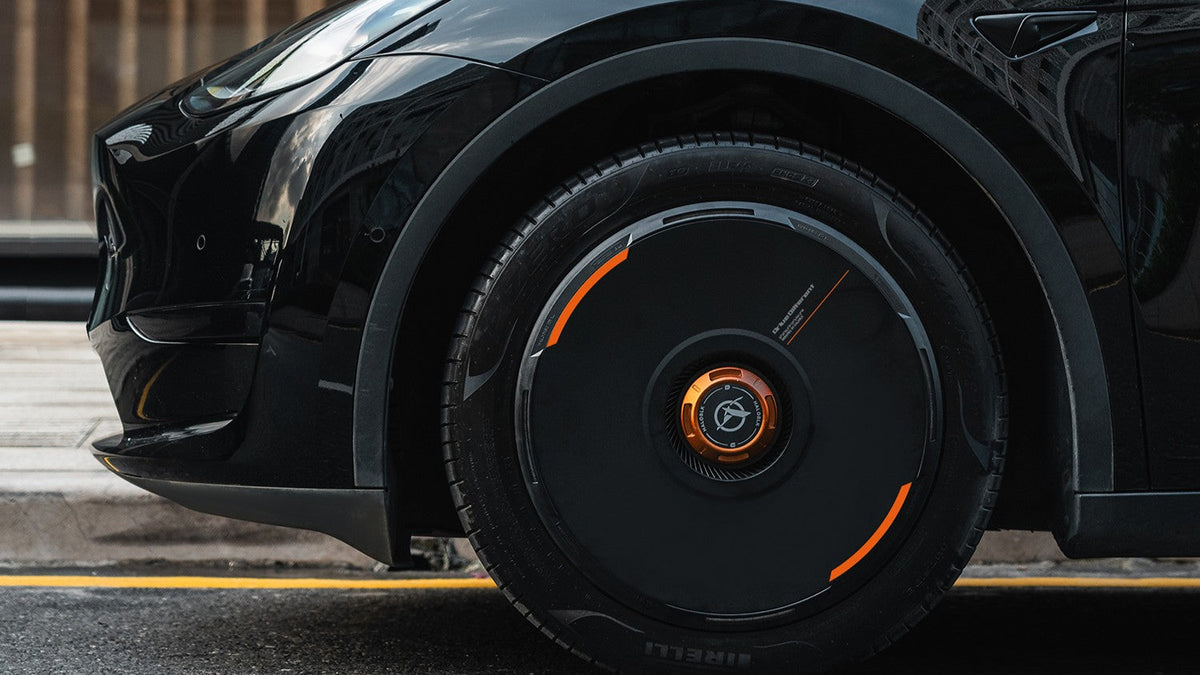
You install a fresh set of Tesla wheel covers on your factory wheels, step back, and love how the car looks. Then, on your next highway drive, you notice a faint shake through the steering wheel. Is it a tire problem, a loose wheel cover, or something else?
It's a reasonable concern, particularly if the vibration started right after you changed the appearance of your wheels.
The good news is that a properly fitted wheel cover typically shouldn't create a noticeable problem. But a damaged or unevenly seated cover can cause noise or vibration, and its rotating weight can, in principle, influence the wheel-and-tire assembly.
Here's what owners should check before paying for unnecessary service or assuming their new covers are the cause.
Tesla Wheel Covers Wheel Balance: The Short Answer
Wheel balancing corrects uneven mass in the combined tire and wheel assembly. A technician uses a machine to locate the imbalance, then attaches small counterweights to the rim.
The process is about how the tire and wheel rotate together, not how sporty the wheels look.
A wheel cover is an accessory attached to that rotating assembly. It doesn't balance a tire, replace a missing counterweight, or repair bent wheels.
If a cover is unevenly manufactured, damaged, or installed off-center, however, its weight could contribute to vibration.
More commonly, a loose cover may rattle against the rim and sound like a balance issue without being the underlying cause.
The key difference: a secure wheel cover is not a substitute for professional balancing, and a new vibration should never be dismissed as cosmetic.
Why a Tesla Might Vibrate After New Wheel Covers
A Tesla can develop vibration for several reasons. Some involve the tires or wheels themselves, while others are related to the fit or condition of the wheel covers.
1. The Tire and Wheel Were Already Out of Balance
A tire can develop uneven wear over time, and wheels can pick up small amounts of damage.
A tire replacement, a pothole impact, or missing wheel weights can change how the assembly rotates.
You might first notice the problem at highway speeds, right around the time you've purchased a new set of covers.
The timing alone doesn't prove the covers caused it. Tire condition can affect ride comfort and handling performance, regardless of which covers are fitted.
If your steering wheel shakes consistently at a particular speed, have a tire professional check the tire, rim, and balancing condition.
The Tesla's suspension and wheel alignment may need attention too, particularly if the wheels have hit a pothole.
2. The Wheel Cover Isn't Fully Seated
Aftermarket wheel covers use different mounting systems.
One design clips to the rim; another uses a mounting ring or center-lock component. An uneven gap, broken clip, or loose cap can make clicking or rattling sounds on the road.
Good installation begins with fitment.
A wheel cover built for one Tesla model or factory wheel design may not fit another, even when both wheels have the same diameter.
The cover should sit evenly, hold securely, and clear the tire sidewall and valve stem.
Some covers are designed to protect the rim edge, but the hardware must still hold the cover in place.
Never keep driving with a visibly loose cover. Pulling it tighter without following the product instructions may make the problem worse.
3. Dirt or Ice Has Collected Behind the Cover
Mud, snow, and road grime add weight wherever they collect.
A small, even film of dirt is one thing; a heavy lump of ice inside one of the wheels is another.
That uneven buildup can create a real shake, not just a rattle.
If the problem appeared after a storm, stop safely and inspect all four wheels.
Remove the covers as directed, clean the wheel and tire area, and check that nothing is trapped behind the cap.
Don't pry at frozen plastic. Let it thaw before removal.
Regular cleaning helps prevent this kind of buildup and makes it easier to spot damaged mounting components.
4. The Cover Touches Something It Shouldn't
Look for contact with wheel weights, brake components, or the tire sidewall.
A scraping sound can come from a wheel cover that sits too close to rim hardware.
Never move or remove a balancing weight to make a wheel cover fit.
Ask a tire shop to verify clearance instead.
Also check for scratches and unusual wear around the mounting points.
A cover designed for the wrong factory wheels can rub even when it seems to snap into place.
Is It a Tire Balance Problem or a Loose Wheel Cover?
Not every vibration has the same cause.
|
What You Notice |
Possible Cause |
What to Check |
|---|---|---|
|
Steering wheel shaking at a repeatable speed |
Tire or wheel imbalance |
Professional wheel balance and tire inspection |
|
Light rattling after installing covers |
Loose clips or mounting components |
Wheel cover fit and retention |
|
Vibration after snow or mud |
Uneven debris buildup |
Clean and inspect the wheels |
|
Clicking or scraping near the rim |
Cover interference |
Mounting clearance |
|
Shaking that continues with covers safely removed |
Tire, wheel, or suspension issue |
Professional vehicle inspection |
These symptoms can overlap.
Road conditions, tire damage, uneven tire pressure, and bent rims can all affect a car.
A common concern is mistaking a mounting rattle for a fault in the wheels.
If you feel sudden or severe shaking, reduce speed, stop safely, and have the vehicle inspected before continuing.
What Changes Across Tesla Models and Wheel Configurations?
Fitment is different from balancing, but poor fitment can make a good wheel cover behave badly.
Before you install any accessories, confirm the Tesla model, model year, factory wheel design, and wheel size.
Don't assume a cover labeled "19-inch" works on every set of 19-inch wheels.
Tesla Model 3 and Model 3 Highland
The Model 3 has used several factory wheel designs across different generations.
Model 3 Highland wheels have their own fitment requirements, and some newer Model 3 configurations are excluded from certain aftermarket products.
A Model 3 tire or wheel upgrade can also change the clearance available behind a cover.
For example, a different tire brand may have a slightly different sidewall shape even when the nominal tire size remains unchanged.
That difference can matter when a full-face wheel cover extends close to the tire.
Check your exact Model 3 specification before ordering.
Tesla Model Y and Model Y Juniper
Model Y owners should distinguish earlier Model Y factory wheels from Model Y Juniper wheel designs.
Even if your Model Y and a friend's Model Y use the same nominal wheel size, their mounting profiles might differ.
A cover for one Model Y wheel style may not fit another Model Y setup.
Model Y Performance configurations can also have different wheels and tires from standard configurations.
Those differences are relevant to tire clearance, mounting, and overall fit.
They don't automatically mean the covers will change the vehicle's mechanical wheel balance.
Tesla Model S and Model X
Model S and Model X wheels can differ in diameter, offset, and tire configurations from Model 3 or Model Y wheels.
A Model S wheel cover isn't interchangeable with a Model X wheel cover by default, even if the wheels look similar.
This is particularly important for performance-oriented configurations with larger factory wheels or different front and rear tire sizes.
For every Tesla model, check the actual wheel and tire setup rather than relying on a broad compatibility claim.
How to Prevent Vibration When Installing Wheel Covers
You don't need a workshop for basic inspections, although professional tire service is the right choice for persistent vibration.
Step 1: Confirm the Right Fit
Start with your Tesla model, wheel generation, rim diameter, and factory wheel design.
If you purchased replacement tires or aftermarket wheels, verify those details too. Aftermarket wheel covers are not universal.
Before you install a cover, compare the factory rims with the compatibility photos.
A model-specific design is more important than a generic size label.
Step 2: Inspect the Wheels and Tires
Look for missing hardware, visible rim damage, debris, or anything near the tire valve stem.
Pay attention to the tire sidewall and tread condition as well.
If the tire shows a bulge, cut, or unusual wear, address that issue before adding accessories.
Do not tamper with wheel weights.
Step 3: Maintain the Correct Tire Pressure
Use the correct tire pressure specified for your Tesla vehicle, rather than guessing from another model.
Tire pressure affects handling, ride comfort, energy efficiency, and tire life.
However, correct tire pressure won't fix a badly balanced wheel-and-tire assembly.
A tire with structural damage also needs more than an air-pressure adjustment.
Step 4: Follow the Installation Instructions
Align the cover and its retaining system exactly as directed.
Avoid hammering, bending clips, or pulling hard on an unsupported section.
Different mounting configurations require different procedures.
Never install covers with broken mounting hardware.
Step 5: Check All Four Wheels
Inspect the opposite side as carefully as the first.
Make sure each cover sits flush and securely, with no contact against the tire.
You should also check the center caps and mounting points for movement.
If one cover feels different from the rest, stop and investigate rather than assuming it's normal.
Step 6: Pay Attention on the First Drive
New rattling sounds, rubbing, or changes in steering feel are reasons to stop and inspect.
If the symptoms continue, arrange professional testing instead of guessing.
Keep the box or order details from the set you purchased. That can save money if you need support rather than an unnecessary second set.
The product name, model configuration, and instructions will help the company or tire service center understand the issue.
Do Aero Wheel Covers Improve Performance or Range?
Balance and aero performance are separate subjects.
Wheel balance deals with rotating mass; aerodynamic performance deals with air moving around the car.
At highway speeds, air resistance plays a larger role in energy consumption and range performance.
Smooth aero wheel covers can reduce drag compared with some exposed wheel designs.
That may support efficiency and range, but the actual difference depends on speed, wind, wheel shape, tire type, vehicle model, and the wheels being compared.
A cover that looks sleek isn't automatically the most efficient one.
Tesla has used aero wheel covers on multiple factory configurations to support range and highway performance.
Removing them can change the airflow around the wheels.
For drivers interested in efficiency without sacrificing range, the key is comparing an actually tested design with the wheel setup already on the car.
A quality aero design may enhance the vehicle's appearance and provide a cool, clean finish, but those benefits shouldn't be confused with improved wheel balancing or stronger tire performance.
No wheel cover can correct tire defects, restore a bent rim, or guarantee better energy efficiency on every road.
HALOBLK HALODISC 2: Style, Fit, and Everyday Performance
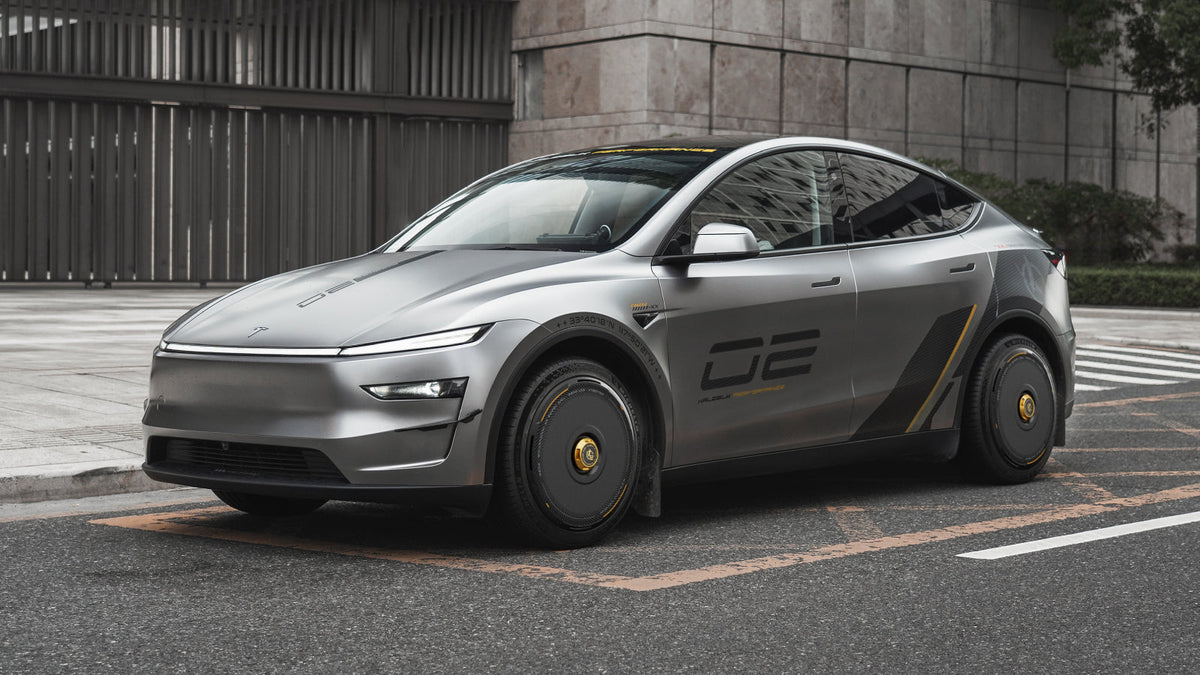
HALOBLK's HALODISC 2 is an option for Tesla owners who want to change the appearance of their existing factory wheels.
Its full-disc style covers portions of the alloy rims, helping protect against light cosmetic scratches and minor curb contact.
That coverage isn't a guarantee against hard curb impacts or deep scratches to the underlying rims.
HALODISC 2 RTP Black
The HALODISC 2 RTP Black offers an understated finish that works well with a minimalist Tesla design.
It's particularly appealing for Model 3 and Model Y owners who want a different look without replacing their entire wheel set.
The full-disc surface also supports HALOBLK's aero-inspired design approach.
HALODISC 2 Cyber Track
The HALODISC 2 Cyber Track brings a bolder, more graphic appearance.
Owners who absolutely love a customized Tesla can choose a style that feels right without investing in entirely new wheels.
Both products use HALOBLK's dedicated center-lock mounting system with a supplied tool.
The system is designed for selected factory wheel configurations across Model 3, Model 3 Highland, Model Y, Model Y Juniper, Model S, and Model X.
That doesn't mean every wheel or tire combination is compatible.
Check the HALOBLK Fitment Guide before purchasing.
The guide lists important exclusions, including certain 2026 Model 3 and Model Y wheel configurations.
A Fitment Detail Worth Knowing
One practical example comes from HALOBLK's Charging wheel cover.
HALOBLK notes that certain 18-inch Model 3 tire combinations may produce noise because of their wider tire sidewalls.
This is a tire-clearance concern, not evidence that the wheels are out of balance.
It's a useful reminder that even a wheel cover designed for a particular Tesla model may have additional tire compatibility limitations.
Check the exact tire model before buying.
Does HALODISC 2 Improve Wheel Balance?
There is no published evidence establishing that HALODISC 2 improves mechanical wheel balance.
Its center-lock system is intended to secure the cover when correctly installed on compatible wheels, but it doesn't replace a tire shop's balancing equipment.
Likewise, aerodynamic efficiency claims depend on actual testing conditions and shouldn't be read as a fixed range boost or guaranteed performance improvement.
If you have concerns about a particular tire, wheel finish, or replacement cap, contact HALOBLK with photos of the wheels and their model details before ordering.
The company can review the listed fitment information with you.
What If the Vibration Started Right After You Changed Covers?
Don't ignore the timing, but don't assume you've found the cause either.
First, reduce speed and stop safely if the car feels unstable.
Look for a damaged tire, missing cap, or loose wheel cover.
If the cover seems compromised, remove it only when safe and according to the manufacturer's method. Don't continue driving with loose hardware.
If the tires and wheels appear sound, a professional can inspect the entire wheel-and-tire assembly.
Tire shops can check runout, rim damage, pressure, and balancing.
A technician may compare how the vehicle behaves with the cover removed, but that test shouldn't delay inspection when symptoms suggest a tire or suspension problem.
If you're reading comments about wheel covers on an owner forum, ask whether the vibration was felt through the steering wheel or heard as a rattle in the interior.
Those details can help narrow down the concern.
A single comment isn't a diagnosis.
A typical forum comment might say, "I changed my wheel covers and the steering shake disappeared."
That can be interesting, but one driver's reaction isn't a controlled test.
Other posts may report no change at all.
A useful comment includes the car model, wheel size, tire condition, speed, and exactly what was changed.
Treat online reactions as clues, not proof.
Final Takeaway: Choose Fit Before the Finish
So, do Tesla wheel covers affect wheel balance?
A well-fitted cover normally shouldn't create noticeable shaking, but its mass, condition, and mounting can matter.
If your car vibrates, check for a loose cover or trapped debris while also considering the underlying tire and wheel assembly.
Proper tire service comes first.
If you're ready for a visual upgrade, explore HALOBLK HALODISC 2 Wheel Covers.
Pick a design you love, verify your exact Tesla model and factory wheel fit, and make sure the system is securely installed.
You don't need new wheels to give your Tesla a fresh look. Start with a design that fits the wheels you already own.

Laisser un commentaire
Tous les commentaires sont modérés avant d'être publiés.
Ce site est protégé par hCaptcha, et la Politique de confidentialité et les Conditions de service de hCaptcha s’appliquent.