
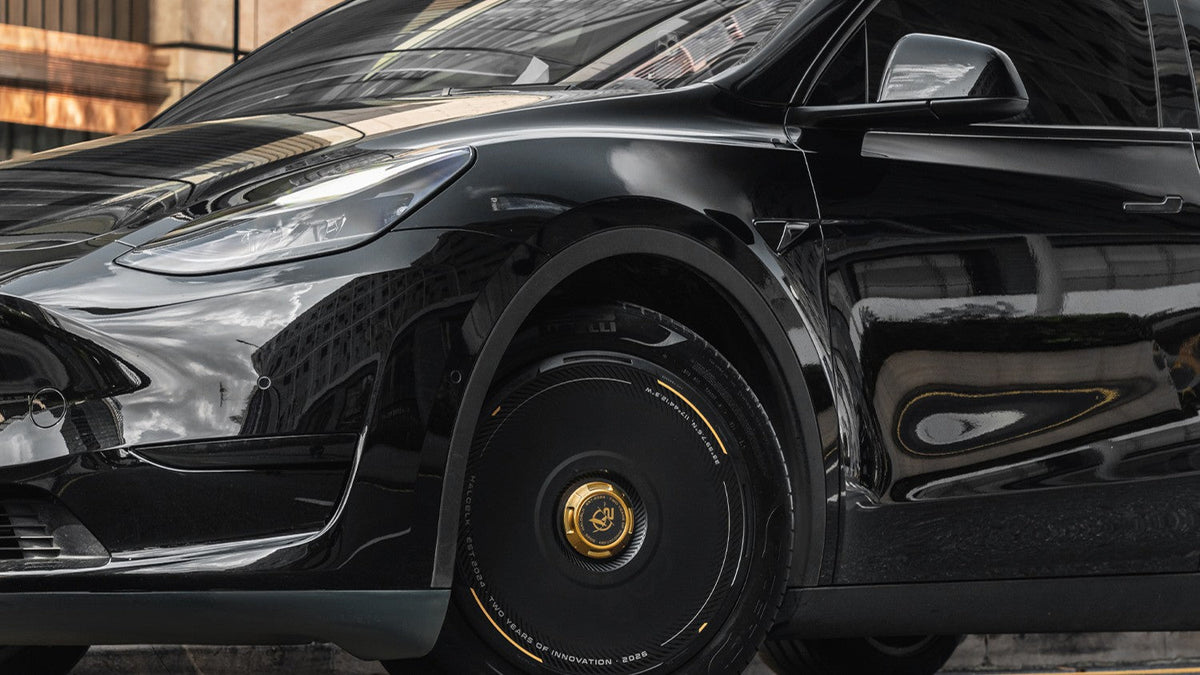
Tesla wheel covers are an easy way to change how your car looks without replacing the factory wheels. Some drivers love the smooth appearance of aero wheel covers, while others choose them for potential range and efficiency benefits.
But there's one question that doesn't get discussed nearly as often: Do Tesla wheel covers affect tire cooling?
It's a fair concern. If aerodynamic wheel covers reduce the amount of air moving through the wheel, could they also trap heat around the tires and brakes?
The short answer is that wheel covers can change airflow around the wheels, but that doesn't automatically mean your tires will run hotter. Tire temperature and brake cooling are different issues, and the effect of a particular wheel cover depends on its design, the vehicle, and driving conditions.
Here's what Tesla owners should understand before choosing their next wheel upgrade.
Tesla Wheel Covers Tire Cooling: How Does It Actually Work?
Let's clear up one common misunderstanding first.
Your tires don't rely mainly on air passing through the wheel spokes to stay cool.
As a tire rolls, it flexes against the road surface. That repeated movement generates heat inside the rubber and tire structure. Driving speed, vehicle weight, inflation pressure, road temperature, and tire construction all influence how much heat builds up.
Air moving around the outside of the tire helps release some of that heat.
A wheel cover sits over the wheel face, not directly around the entire tire. That's why covering the alloy rim doesn't automatically block the tire's normal cooling process.
However, airflow around the whole wheel assembly can change when a cover is installed. This may influence the temperature environment inside the wheel cavity.
So, can Tesla wheel covers affect tire temperature? Potentially, but the actual difference needs vehicle-specific testing.
For everyday Tesla owners, maintaining the correct tire pressure and using suitable tires matter far more than assuming a particular cover will improve cooling.
Tire Cooling vs Brake Cooling: What's the Difference?
These two topics often get mixed together, but they involve different parts of your car.
Tire Cooling
Tire cooling is primarily about managing the heat produced while the tire rolls, flexes, and contacts the road.
Underinflated tires generally flex more, creating additional heat that can shorten tire life and affect performance.
That's why proper inflation, tire condition, and load limits are essential regardless of whether you use wheel covers, hub caps, or exposed alloy wheels.
Brake Cooling
Brake cooling is different.
When conventional disc brakes slow a vehicle, the brake pads press against the rotors, converting motion into heat.
Airflow around the brake discs helps dissipate that heat.
A more enclosed aero wheel design may alter how air enters and leaves the wheel cavity. Depending on the design, it could reduce or redirect airflow that would otherwise help cool the brakes.
That doesn't automatically make aerodynamic wheel covers unsafe. It means brake cooling needs to be considered alongside aerodynamic efficiency.
Here's a simple comparison:
|
Feature |
Tire Cooling |
Brake Cooling |
|---|---|---|
|
Main heat source |
Tire flexing and road contact |
Friction between pads and rotors |
|
Main components |
Tires and surrounding air |
Disc brakes and calipers |
|
Important factors |
Pressure, load, speed, road temperature |
Braking frequency, speed, airflow |
|
Wheel cover effect |
Possible indirect airflow changes |
Can alter ventilation around brakes |
|
Best maintenance |
Tire pressure and condition checks |
Brake inspection and servicing |
The main takeaway is simple: reducing aerodynamic drag and maintaining adequate brake cooling are two different design goals.
Why Tesla's Regenerative Braking Matters
Tesla vehicles have an advantage when it comes to everyday brake use: regenerative braking.
Instead of relying entirely on the conventional disc brakes to slow down, the electric motors can recover energy during deceleration and send it back to the battery.
On a normal commute, this often means the friction brakes work less frequently than they would in a conventional gasoline-powered car.
That can reduce the amount of heat generated by the brakes during routine driving.
However, regenerative braking doesn't eliminate the need for traditional braking.
Your Tesla still uses its disc brakes during emergency stops, certain braking conditions, and whenever additional braking force is required.
Regenerative braking may also be limited when the battery is cold or fully charged.
So even though a Tesla Model Y or Model 3 may generate less friction-brake heat during normal commuting, proper brake cooling remains important.
The same principle applies across Tesla models, including Model S and Model X.
For more information, see the Tesla Model Y Owner's Manual — Braking and Stopping.
Can Aero Wheel Covers Make Brakes Run Hotter?
This is where wheel cover design becomes interesting.
Traditional open-spoke wheels allow air to move through parts of the wheel face. Full-disc aero covers create a smoother exterior surface, changing the airflow around the rotating wheel.
That smoother profile can help reduce turbulence and aerodynamic drag.
But the same design also changes the paths air can take near the brakes.
Different wheel covers may have different effects depending on their shape, ventilation, mounting geometry, and clearance.
An enclosed wheel cover isn't automatically a brake-cooling problem, but manufacturers shouldn't assume brake temperatures remain unchanged without testing.
Does Driving Speed Matter?
Yes.
At higher speeds, aerodynamic forces become more significant. That's when a well-designed aero wheel can provide a greater efficiency benefit.
Braking conditions matter too.
For example, an ordinary highway trip with gentle deceleration is different from repeated hard braking on a winding mountain road.
Under demanding conditions, disc brakes can generate substantial heat.
If you're planning track driving or other high-demand use, don't assume an accessory designed for normal roads has been tested for those conditions.
HALOBLK, for instance, specifies that HALODISC 2 is intended for standard street use, not racing or track driving.
For everyday drivers, the sensible approach is to use properly fitted products, follow the manufacturer's limitations, and never ignore brake warnings or unusual braking behavior.
Do Aerodynamic Wheel Covers Improve Tesla Range?
One reason aero wheel covers are popular is their potential to improve aerodynamic efficiency.
At highway speeds, a substantial share of a car's energy goes toward overcoming air resistance.
An exposed wheel can create turbulent airflow around the spokes and wheel cavity.
Aerodynamic wheel covers aim to smooth that airflow and reduce drag.
A well-designed cover may help improve range compared with certain uncovered wheel configurations, particularly at sustained higher speeds.
However, not all aero covers deliver the same efficiency improvement.
The result depends on several factors, including:
- The Tesla model and factory wheel design
- Driving speed and wind conditions
- Tire type and inflation pressure
- The original wheel's aerodynamic performance
- The cover's shape and installation
- Road conditions and vehicle configuration
HALOBLK reports efficiency improvements reaching up to 10% under specific high-speed crosswind test conditions.
That's a product-specific, condition-dependent figure, not a guaranteed range improvement for every Tesla vehicle.
Likewise, general claims that aerodynamic wheel covers always improve efficiency by 3% to 5%, or reduce drag by a fixed percentage, shouldn't be applied to every product without comparable testing.
For drivers interested in saving energy, aerodynamic design is worth considering. Just remember that better aerodynamics doesn't automatically mean better tire cooling.
Does the Type of Wheel Cover Matter?
Absolutely. Not every wheel cover serves the same purpose.
Factory Aero Covers
OEM Tesla aero covers are designed around specific factory wheels.
They typically provide a smoother wheel face while retaining the mounting geometry intended for that configuration.
Tesla owners often leave these aero covers installed to preserve the original aerodynamic setup.
Factory covers may also shield portions of the underlying alloy rims from road debris and minor cosmetic scratches.
However, they cannot guarantee protection against curb rash.
Full-Face Aftermarket Wheel Covers
Full-face aftermarket wheel covers cover most of the visible wheel surface, creating a more dramatic appearance.
Some are designed for aerodynamic efficiency, while others focus primarily on style and protection.
The shape of the entire rim, center mounting system, and outer edge all affect the finished fit.
A full-face design may also conceal existing cosmetic curb marks on the original wheels.
Still, buyers should check whether the product has appropriate clearance around the brakes, tires, and mounting components.
Minimalist Hub Caps and Center Caps
Small hub caps, aero caps, and center cap accessories cover a much smaller area.
They can create a clean appearance without concealing the whole wheel.
Because they leave much of the spoke area exposed, their airflow characteristics can differ significantly from enclosed wheel covers.
If you prefer the appearance of your factory rims, replacing the center cap or selecting a minimalist accessory may be a better option than covering the entire rim.
Neither approach is universally better. It depends on your preferred style, vehicle use, and verified compatibility.
HALOBLK HALODISC 2: A Tesla Wheel Cover Upgrade Worth Considering
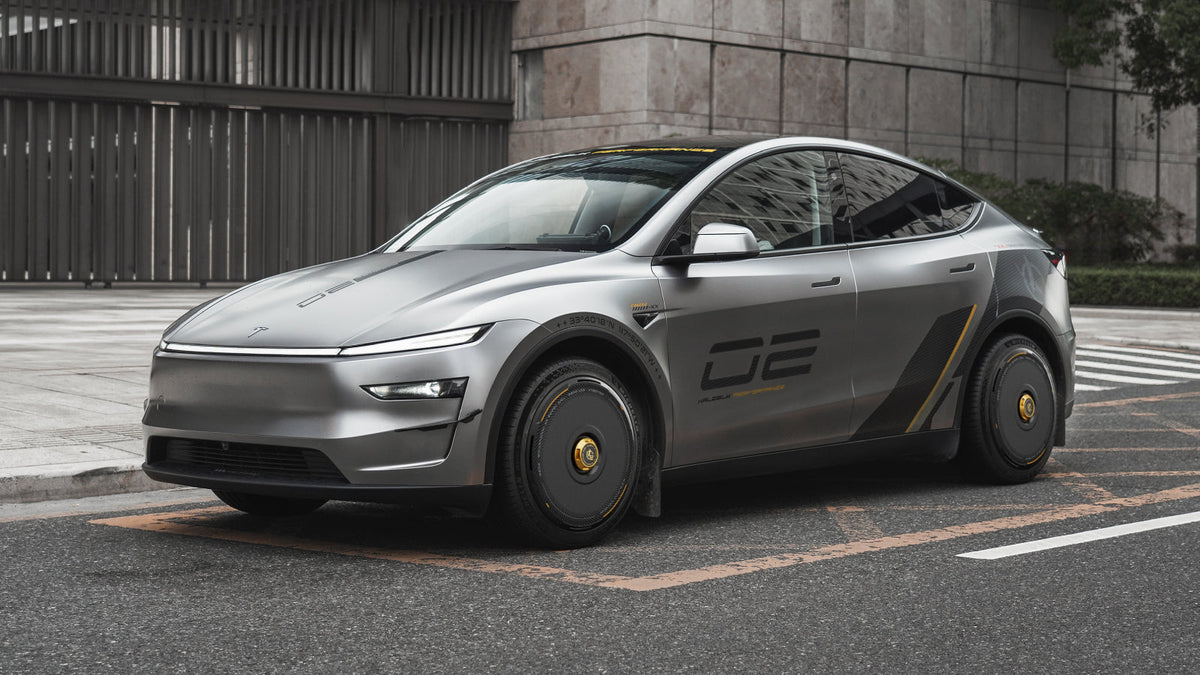
For Tesla owners who want a more distinctive appearance without replacing their OEM wheels, HALOBLK offers its HALODISC 2 series.
The lineup uses a full-disc design intended to create smoother airflow around compatible factory wheels.
HALODISC 2 also features a dedicated center-lock system with a proprietary removal tool.
The design helps discourage casual unauthorized removal and provides a secure fit when correctly installed, although no locking mechanism can guarantee theft prevention.
The products are intended for selected factory Tesla wheel configurations, so confirming the correct fit is essential.
HALODISC 2 RTP Black: Clean, Minimalist Style
The HALODISC 2 RTP Black offers a smooth, understated appearance.
Its dark, full-face surface changes the look of the original wheels without requiring a complete wheel replacement.
For owners who prefer a simple exterior, it's an appealing way to personalize a Tesla Model 3, Model Y, or another compatible vehicle.
The cover also provides added surface coverage that may help protect portions of factory rims from light scratches and everyday road debris.
However, it doesn't guarantee protection against significant curb impacts.
HALODISC 2 Custom Numbers: A More Personal Look
Want something a little different?
The HALODISC 2 Custom Numbers series lets owners choose personalized numbers and color accents.
The currently listed accent finishes include Red, Blue, Orange, Green, and Grey.
It's a good option for customers who enjoy a custom style but want to keep their original Tesla wheels.
Matching center-lock caps complete the appearance, while the enclosed disc follows HALOBLK's aero-inspired design.
Individual replacement discs and center caps are also available for selected products, which can make maintenance easier than replacing an entire set.
What About Brake Cooling?
HALODISC 2 is designed around the aerodynamics of compatible Tesla factory wheels.
However, publicly available product information does not establish a universal measured brake-temperature difference for every supported vehicle configuration.
For that reason, it would be misleading to promise that HALODISC 2 improves tire cooling or guarantees unchanged brake cooling in every driving situation.
The product is intended for standard street use, and owners should follow its specific usage and installation instructions.
Before purchasing, use the HALOBLK Fitment Guide to confirm your Tesla model, wheel size, factory wheel design, and any compatibility exclusions.
How to Maintain Tesla Wheel Covers and Tires
Whether you choose factory aero wheel covers or aftermarket accessories, regular maintenance helps keep everything working as intended.
Check Tire Pressure Regularly
Correct tire pressure is one of the easiest ways to protect your tires and support efficiency.
Underinflated tires generate more heat because they flex excessively while driving.
Check pressures when the tires are cold and follow the values recommended by Tesla for your vehicle.
Don't assume installing aero wheel covers changes those requirements.
Keep the Wheel Area Clean
Dirt, brake dust, and road debris can collect around wheel covers.
Clean the exterior with mild soap, water, and a soft cloth or brush. Avoid abrasive tools that could scratch the finish.
Some products include protective tape or foam strips as part of their mounting system. If your particular cover uses them, inspect their condition and follow the instructions before replacing damaged pieces.
Don't add extra foam strips or modify the mounting arrangement unless the manufacturer approves it.
Inspect the Mounting System
A secure fit matters for both safety and durability.
Check for loose clips, damaged center caps, cracks, or rubbing near the tire sidewall.
When installing a cover, align the supplied insert or mounting components properly. Some designs use snap-on clips, while HALODISC 2 uses a center-lock mechanism and supplied tool.
If the cover doesn't fit correctly, don't force it into place.
Also, never continue driving with loose or damaged wheel covers.
Pay Attention to Brake Performance
If you notice unusual brake noise, reduced stopping performance, persistent brake warnings, or an abnormal burning smell, have the vehicle inspected.
A wheel cover should never be used to conceal a mechanical problem.
Tesla's regular maintenance recommendations still apply, with or without aero covers.
Are Tesla Wheel Covers Worth It?
For many Tesla owners, wheel covers are an attractive upgrade because they change the exterior appearance without the cost of replacing factory wheels.
Depending on the design, they can offer several practical benefits:
- A cleaner, more personalized wheel appearance
- Potential aerodynamic efficiency improvements
- Partial protection from cosmetic scratches and road debris
- An alternative to expensive wheel replacement
- Removable styling that leaves the original wheels in place
But tire cooling shouldn't be treated as an automatic benefit.
Good tire maintenance matters regardless of which accessory you purchase, while brake cooling depends on the actual wheel and vehicle design.
A quality wheel cover should balance appearance, durability, secure mounting, aerodynamics, and appropriate use limitations.
Final Thoughts: Aero Efficiency Without Overlooking Safety
So, do Tesla wheel covers affect tire cooling?
They can change airflow around the wheels, but they don't directly control tire temperature. For most everyday drivers, correct tire pressure, tire condition, and driving habits remain the more important factors.
Brake cooling is a separate consideration. Although Tesla's regenerative braking reduces everyday friction-brake use, the disc brakes still need to dissipate heat when they're working.
The best wheel covers aren't simply the ones that look cool. They're products with a great fit, clear compatibility information, suitable mounting hardware, and realistic performance claims.
Thinking About Giving Your Tesla Wheels a New Look?
You don't need to replace your factory rims to make your Tesla stand out.
Explore HALOBLK HALODISC 2 Wheel Covers and discover designs that combine full-disc styling, an aero-inspired profile, and a dedicated center-lock system.
Choose a finish that matches your Tesla, confirm the fit for your factory wheels, and enjoy an upgrade that makes every drive feel a little more personal.
Your Tesla already looks different. Why not give the wheels a style of their own?

Laisser un commentaire
Tous les commentaires sont modérés avant d'être publiés.
Ce site est protégé par hCaptcha, et la Politique de confidentialité et les Conditions de service de hCaptcha s’appliquent.