
Introduction
Buying wheel covers for a Tesla Model 3 looks easy. You choose a design, check the size, install the covers, and expect the car to look better. But many Tesla owners later notice issues like a loose wheel cover, noise, poor alignment, damaged clips, or less protection around the rim edge.
The right tesla wheel covers can improve the vehicle's appearance, help protect the wheel, and keep the clean aero look many Tesla drivers like. The wrong covers may look fine at first, but become a common issue after normal driving, especially on rough roads or after hitting a curb.
Here are the main model 3 wheel cover buying mistakes to avoid.
Mistake 1: Buying the Wrong Fit
The biggest mistake is buying wheel covers without checking exact fitment. Tesla Model 3 wheels can vary by year, trim, and wheel design. A cover that fits one wheel may not fit another correctly, even if both are made for a Tesla model.
Before buying, check the wheel size, model year, original rim design, and whether the cover matches your specific wheel. If the fit is wrong, the cover may not align with the wheel spokes, center area, or valve stem. It may look slightly off, feel loose, or pop out during driving.
A product page should explain compatibility clearly. If it only says “fits Model 3” without details, that can be a risk.
Mistake 2: Ignoring Clip Quality
Clips are small, but they decide whether the cover stays secure. Poor clips can cause loose covers, rattling noise, or a cover that pops off after a bump. Damaged clips or worn clips are also common reasons covers become unstable over time.
When checking aftermarket wheel covers, look for information about clip design, replacement clips, and how the cover locks onto the rim. The clips should hold firmly without scratching the wheel. They should also handle normal driving, speed changes, and rough roads.
Some buyers try temporary fixes when clips start breaking, such as adding foam tape or pushing the cover back in place. Foam tape may reduce small noise, but it should not hide a serious fitment problem. If clips are cracked or missing, replace them.
Mistake 3: Choosing Looks Only
Many Tesla owners buy covers because they want the car to look cleaner or more custom. That makes sense. Wheel covers can quickly improve the vehicle's appearance without buying new wheels.
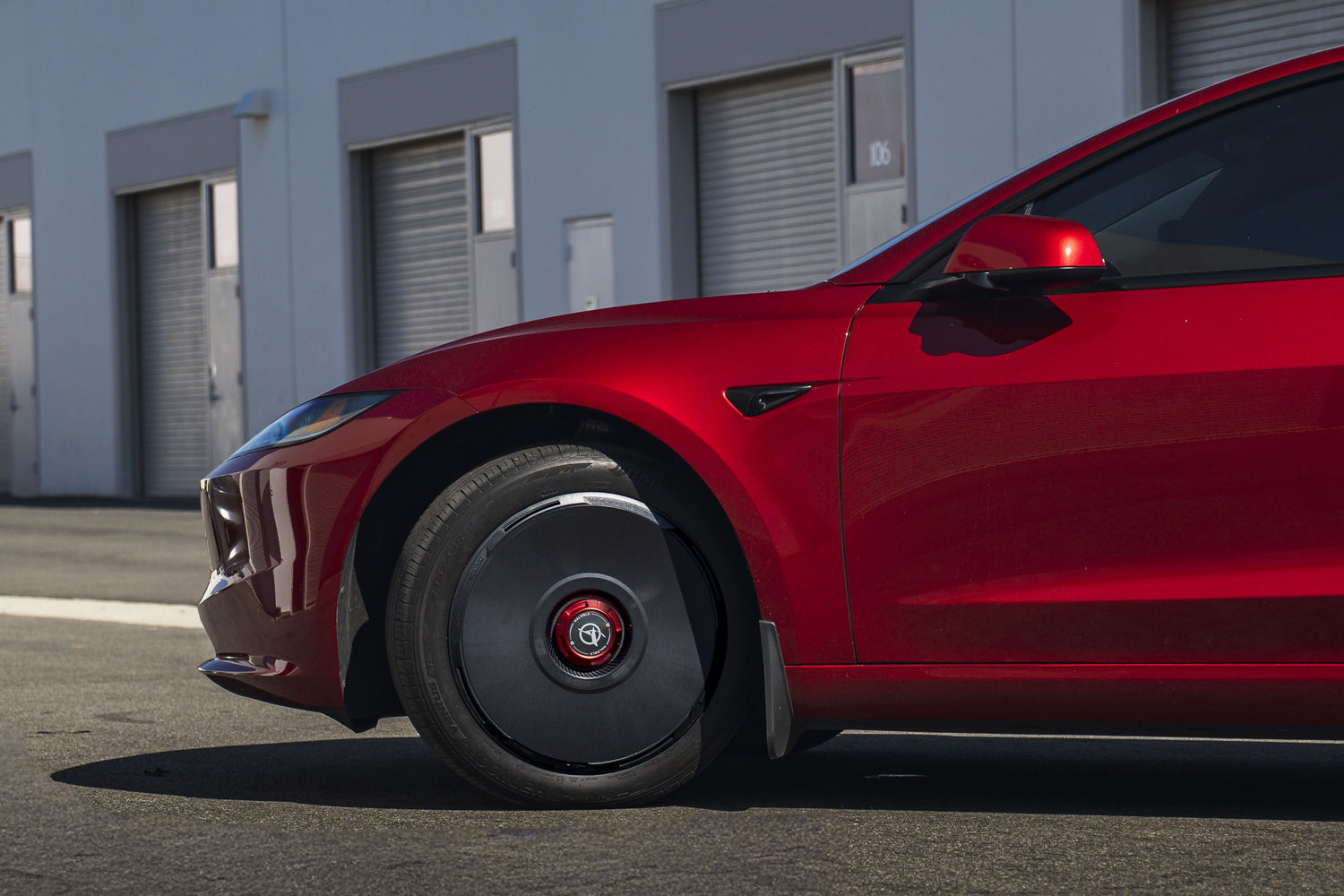
But looks should not be the only reason. Good covers should also help protect the rim from light scratches, dirt, debris, and daily curb rash risk. If you often park close to curbs, edge coverage matters.
Some hubcaps only cover the center and leave the rim edge exposed. Others wrap closer to the edge and offer better visual protection. If curb rash is your main worry, check how much coverage the product gives around the wheel edge.
Mistake 4: Missing Valve Stem Alignment
Valve stem alignment is easy to overlook, but it affects daily use. If the valve stem opening is not placed correctly, checking tire pressure becomes annoying. The cover may also press against the valve stem area or sit unevenly on the wheel.
Before installing wheel covers, align the valve stem first. Then check the center and spokes before pressing the cover into place. If the cover feels wrong, do not force it. Remove it, align it again, and install it properly.
A cover installed correctly should sit flat, look centered, and allow easy access to the valve stem.
Mistake 5: Rushing Installation
Another common mistake is installing wheel covers too fast. Some people press one side first, then force the rest of the cover into place. That can bend clips, create poor alignment, or make the cover look fixed when it is not secure.
For proper installation, clean the wheel first. Remove dirt, dust, and small debris from the rim and spokes. Then align the valve stem opening, position the center, and press evenly around the cover. Do not hit the cover too hard. Do not use random tools unless the brand gives clear instructions.
After installation, gently pull the cover to check whether it is secure. If you hear a click or notice movement, check the clips again.
Mistake 6: Ignoring Noise
If you hear noise after installation, do not ignore it. Rattling, clicking, or rubbing can mean the cover is loose, misaligned, or touching the wheel spokes incorrectly.
Noise may also happen when dirt or debris is trapped behind the cover. In other cases, damaged clips, foam tape in the wrong place, or a cracked cover may be the cause.
A small noise does not always mean the cover is dangerous, but it should be checked. Remove the cover, clean the wheel, inspect the clips, and install it again. If the noise continues, the cover may not be the correct fit.
Conclusion
The best Tesla Model 3 wheel covers are not just about style. They should fit correctly, install securely, protect the rim, align with the valve stem, and stay stable during normal driving.
To avoid common mistakes, check fitment carefully, pay attention to clip quality, avoid forcing installation, listen for unusual noise, and replace damaged covers when needed. A good set of aftermarket wheel covers can make your Tesla look cleaner and help maintain daily protection, but only when the covers are chosen and installed properly.

Leave a comment
All comments are moderated before being published.
This site is protected by hCaptcha and the hCaptcha Privacy Policy and Terms of Service apply.