
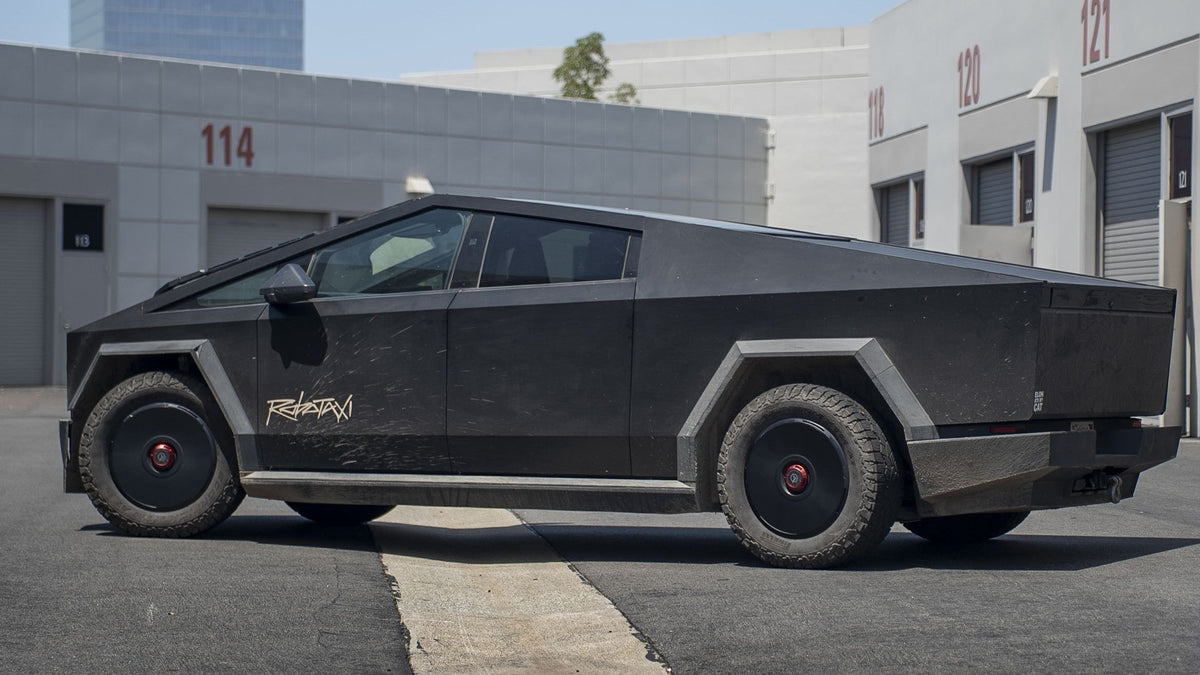
If you spend much time thinking about Cybertruck efficiency, wheel covers probably seem like a surprisingly small detail.
But at highway speeds, small aerodynamic details matter.
So, do Cybertruck wheel covers improve range?
The short answer is yes, aerodynamic wheel covers can improve efficiency and potentially extend highway range, mainly by smoothing airflow around the rotating wheels and reducing aerodynamic drag. In various controlled and real-world wheel-cover tests, efficiency improvements often fall in the low-single-digit range, with roughly 2% to 5% improvements appearing under highway conditions.
That does not mean every Cybertruck will automatically gain the same number of miles.
Speed, tire pressure, tires, wind, temperature, climate control, road conditions, wheel design, and even how securely the covers are installed can all change the result.
And for Cybertruck owners, there is another important point: good wheel covers are not only about range. They can also change the truck's appearance and provide more coverage for those large, exposed wheels.
Why Wheel Aerodynamics Matter More Than You Might Think
A wheel does not simply roll through the air.
At highway speeds, it is a large rotating surface constantly disturbing the airflow around the vehicle.
Open spokes, tire shoulders, lug nuts, and an exposed wheel face all create areas where air can separate and become turbulent. That turbulence contributes to aerodynamic drag.
A smoother aero wheel cover changes the way air flows across that area.
Instead of allowing air to move through multiple open spokes, a closed or mostly closed wheel face gives the airflow a cleaner path around the vehicle.
That is why aero covers have been used on electric vehicles for years.
For an EV, reducing drag matters because less energy is required to maintain a given speed. That means lower energy consumption and potentially more miles of range from the same battery charge.
The effect becomes increasingly important as speed rises.
Highway Driving Is Where Wheel Covers Make the Biggest Difference
If most of your driving is low speed city driving, changing wheel aerodynamics probably will not create a dramatic difference.
At lower speeds, aerodynamic drag represents a smaller portion of total energy use. Rolling resistance, acceleration, braking, cabin heating, air conditioning, and traffic patterns can easily hide a small efficiency gain.
At highway speeds, the situation changes.
Air resistance rises rapidly with speed, which means the aerodynamic design of the wheels starts to matter much more.
That is why many wheel-cover tests show a clearer difference during highway driving than during city driving.
Here is a useful way to think about the numbers:
|
Driving Scenario |
What Testing Has Shown |
|---|---|
|
Low-speed city driving |
Usually a small or difficult-to-measure difference |
|
Around 70 mph |
Some testing has shown approximately 2.5% better efficiency |
|
General highway driving |
Roughly 2%–5% gains have been reported depending on conditions |
|
Controlled testing |
Around 3.4% improvement has appeared in some comparisons |
|
Very high speeds around 90 mph |
Some tests have reported gains around 4.5% |
|
Longer highway trips |
Potential range differences of several miles become easier to notice |
These figures should be treated as test examples rather than guaranteed Cybertruck results.
That distinction matters.
If a cover improves efficiency by 3%, it does not mean your Cybertruck suddenly receives a fixed number of extra miles every time you drive. The actual range difference depends on the baseline efficiency of that particular trip.
On a long road trip, however, even a small percentage improvement can become noticeable.
A few percent may translate into roughly 3 to 10 extra miles in some highway situations, and under favorable long-trip conditions the difference could be larger.
Over months of highway driving, those small energy savings also add up.
Why Cybertruck Makes Wheel Design Especially Interesting
Cybertruck is not a small, lightweight EV.
It has a large body, large tires, substantial wheel diameter, significant vehicle weight, and a design that places plenty of visual emphasis on the wheels themselves.
That makes the wheel area especially interesting from both an aerodynamic and styling standpoint.
Large exposed wheels can generate considerable turbulence. A smoother wheel surface can help manage that airflow and create a cleaner aerodynamic profile.
But Cybertruck also makes fitment especially important.
Tesla's early Cybertruck wheel-cover design drew attention because parts of the original cover could contact the tire sidewall. That is a good reminder that an aerodynamic cover is only useful when it has been designed around the actual wheel and tire combination.
A cover that looks aerodynamic but does not fit correctly can create completely different problems.
Poor fitment may cause:
- vibration at higher speeds;
- unwanted noise;
- movement around the wheel face;
- poor aerodynamic performance;
- contact with surrounding components; or
- a greater chance of the cover becoming loose.
A well-designed cover should therefore balance aerodynamic efficiency, retention, clearance, brake ventilation, protection, and installation security.
Fitment Can Affect Efficiency Too
Fitment usually gets discussed as a safety or installation issue, but it also affects aerodynamics.
Imagine installing an aero cover that does not sit flush against the wheel.
Even if the basic design is aerodynamic, gaps or movement allow air to enter behind the cover. That can disrupt the smooth airflow the cover was supposed to create.
Correct fitment helps keep the wheel face consistent.
That is particularly important at higher speeds, when aerodynamic forces become stronger.
Before buying aftermarket covers, always confirm:
- exact Tesla model;
- wheel design;
- wheel diameter;
- tire and wheel compatibility;
- mounting system; and
- installation instructions.
Do not choose a cover simply because a product page says "Cybertruck compatible." The actual wheel configuration matters.
Range Is Only One Reason to Use Cybertruck Wheel Covers
For many owners, a small efficiency gain is actually the bonus rather than the main reason they install covers.
Full-Rim Coverage
Cybertruck wheels are large, which also means there is plenty of exposed wheel surface to scratch.
A full-rim coverage design can add another layer between the wheel and everyday road debris, light scuffs, and parking-related contact.
A wheel cover should not be treated as crash protection, but for everyday use, additional rim coverage can be valuable.
This is particularly relevant if you want to keep the original wheels looking cleaner without immediately switching to new wheels.
A Different Look Without Replacing the Wheels
Aftermarket covers also make it possible to change the vehicle's appearance without buying an entirely new wheel-and-tire setup.
And Cybertruck is probably one of the vehicles where this matters most.
Its angular body design already looks unconventional. Changing the wheels can dramatically alter the entire personality of the truck.
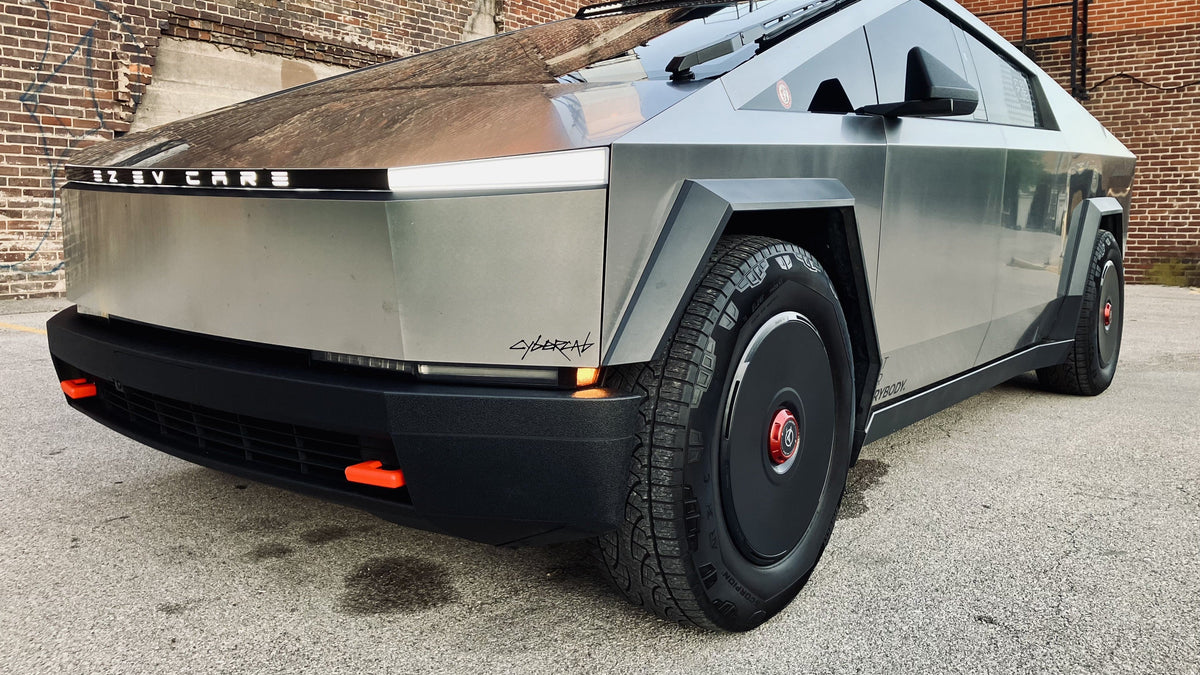
A matte black full-disc design, for example, creates a much more technical, futuristic look while still using the existing wheels.
For owners who want personalization, wheel covers can also become part of the vehicle's visual identity rather than simply a functional aero component.
That style-and-protection combination is particularly relevant for HALOBLK's target buyers, where appearance, rim protection, easier customization and avoiding the cost of new wheels are stronger purchase drivers than range alone.
HALODISC 2 for Cybertruck: Designed Around the Truck, Not Just the Wheel Size
This is where Cybertruck-specific design becomes important.
HALOBLK's HALODISC 2 for Cybertruck is designed specifically around the Cybertruck rather than simply adapting a generic Tesla wheel cover.
The system uses a Cybertruck-specific center lock, while the closed-disc design is intended to create smoother airflow across the wheel profile and reduce wheel turbulence at higher speeds. HALOBLK's current Cybertruck page also offers the clean all-black RTP — Ready to Paint — edition and a Custom Numbers Series for owners who want something more personal.
There are three product ideas that make particular sense for Cybertruck.
First, the design needs to account for a heavy vehicle with substantial torque and large wheels. That makes secure attachment much more important than simply creating something that clips loosely onto the rim.
Second, the redesigned center-lock system is intended to create a more precise connection with the Cybertruck wheel.
Third, the large wheel format gives a full-disc cover plenty of surface area to provide rim protection while also changing the visual character of the truck.
That combination—aerodynamics, secure fitment, rim coverage and Cybertruck-specific styling—is more useful than treating an aero cover as a simple range accessory.
RTP or Custom Numbers: Two Very Different Cybertruck Looks
Not every Cybertruckowner wants the same thing.
For a clean, almost industrial appearance, the HALODISC 2 RTP is probably the simplest direction.
The all-black disc works naturally with Cybertruck's angular stainless-steel body. Because RTP means Ready to Paint, it also works as a blank canvas for owners who want to build their own finish later.
For something more personal, HALOBLK's Custom Numbers design lets owners make the wheel part of the truck's identity rather than leaving it as a generic black disc.
HALOBLK currently supports numbers from 00 to 99, along with multiple center finishes and optional personalized text engraving on its Cybertruck design.
Neither option requires replacing the entire wheel simply to achieve a noticeably different exterior look.
What Actually Determines Your Cybertruck Range?
Wheel covers are only one piece of the efficiency equation.
If you want to measure a real-world difference, pay attention to several variables.
Tire pressure is one of the biggest. Low pressure increases rolling resistance and can easily distort an efficiency comparison.
Cold weather also matters. Battery temperature and cabin heating can raise energy use enough to hide relatively small aerodynamic gains.
The same applies to strong wind.
A headwind on your first test and a tailwind on your second can make a wheel-cover comparison essentially meaningless.
New tires may also behave differently from worn tires because of tread depth and rolling resistance.
Then there is speed.
If one test averages 63 mph and another averages 74 mph, you are no longer performing a controlled comparison.
That is why a single road trip is rarely enough to prove how much difference a wheel cover makes.
How to Test Aero Wheel Covers on Your Own Cybertruck
If you really want to know whether the covers improve your efficiency, a simple controlled test is much more useful than comparing random trips in the Tesla app.
Choose the same route and try to keep the major variables consistent.
Use the same tire pressure. Keep climate control settings consistent. Carry roughly the same load. Drive at a similar time of day if possible, and avoid testing during dramatically different wind or weather conditions.
Then compare:
Run A: covers removed or baseline wheel setup
Run B: aero covers installed
Run A again: return to the original setup
Repeating the test helps reduce the chance that one unusual trip created the difference.
Record energy use rather than relying only on the estimated range display.
For example:
|
Test Variable |
Record This |
|---|---|
|
Route |
Same start and finish |
|
Distance |
Total miles |
|
Average speed |
mph |
|
Tire pressure |
PSI |
|
Temperature |
°F |
|
Wind |
Speed/direction if available |
|
Climate control |
Temperature/settings |
|
Baseline consumption |
Wh/mi |
|
Cover consumption |
Wh/mi |
|
Difference |
% |
That kind of controlled testing gives you a much better answer than saying, "I drove farther this time, so the covers must work."
So, Do Cybertruck Wheel Covers Improve Range?
For highway-focused Cybertruck owners, the answer is they can.
Aerodynamic wheel covers create a smoother wheel face, reduce turbulence around a rotating wheel and can lower aerodynamic losses.
The effect tends to become more noticeable at highway speeds, while there may be much less difference during city driving.
Based on the range of wheel-cover testing commonly discussed, a roughly 2%–5% efficiency improvement is a reasonable range to investigate rather than a number every driver should expect.
The more important point is that a well-designed wheel cover can do several jobs at once:
improve airflow, cover more of the rim, change the truck's appearance, and avoid the cost of installing completely new wheels.
For something as visually distinctive as Cybertruck, that combination may matter more than chasing one fixed range number.


Leave a comment
All comments are moderated before being published.
This site is protected by hCaptcha and the hCaptcha Privacy Policy and Terms of Service apply.