
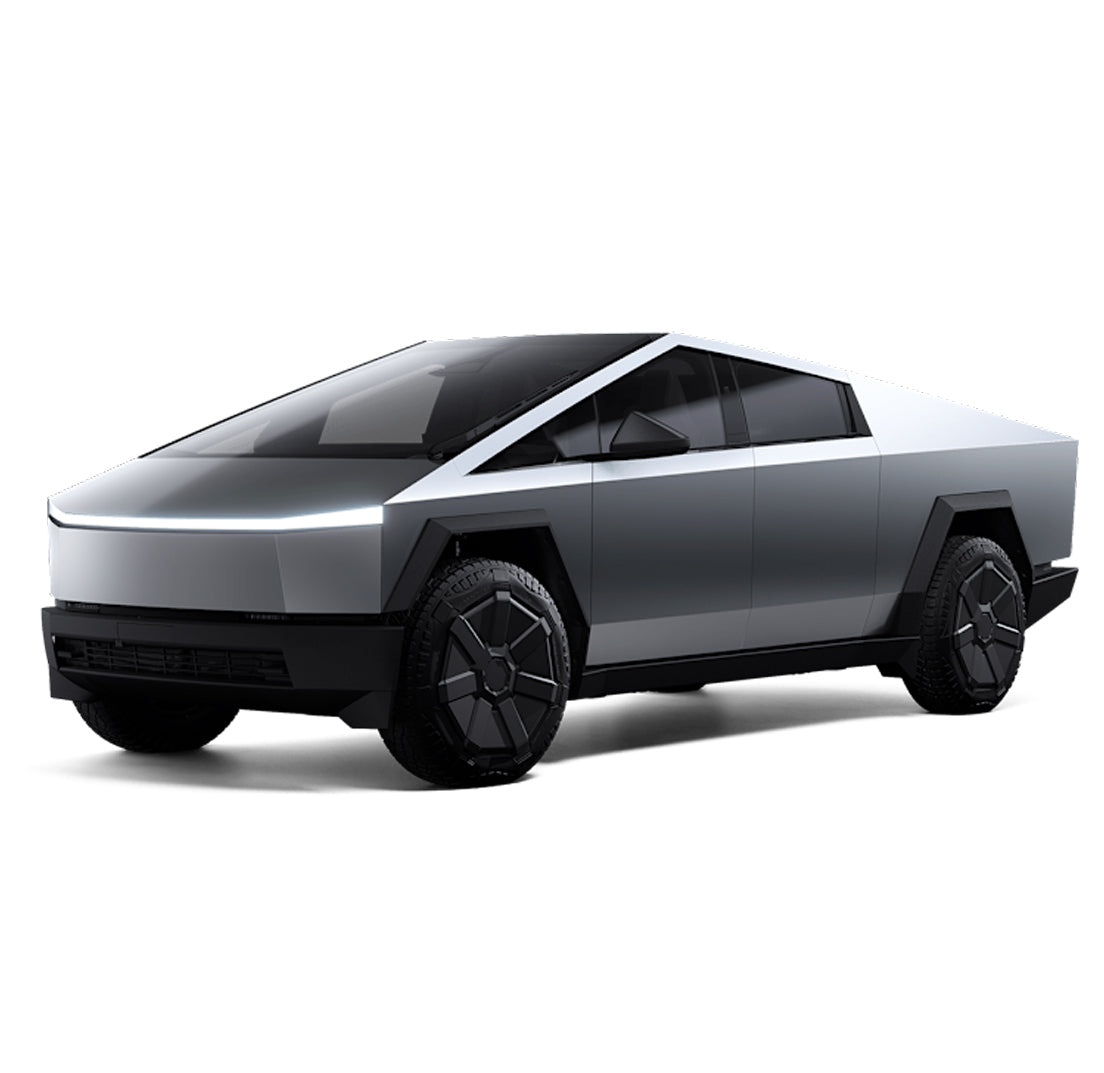
Do Cybertruck wheel covers actually improve efficiency, or is the difference too small to notice?
It's a fair question. Aerodynamic wheel covers are designed to smooth airflow around the wheels, potentially reducing drag during highway driving. But seeing a claimed efficiency gain and measuring one on your own Tesla Cybertruck are two very different things.
The good news? You don't need a wind tunnel to get a useful answer.
With the right testing approach, you can compare energy consumption with and without wheel covers, identify a measurable difference, and decide whether aero covers are worth keeping.
Here's how to test Cybertruck wheel cover efficiency without letting weather, tire pressure, or driving conditions distort your results.
Do Aerodynamic Wheel Covers Really Improve Efficiency?
Before testing anything, it helps to understand why wheel aerodynamics matter.
As your Cybertruck moves, air flows around the body, tires, and rotating wheel surfaces. Open spokes and exposed wheels can create turbulence, adding to the vehicle's overall aerodynamic drag.
Aero wheel covers reduce the amount of exposed wheel surface, potentially helping air move more smoothly around the wheel face.
This matters most at higher speeds.
During low speed city driving, rolling resistance, acceleration, and frequent braking can have a greater influence on energy consumption.
At highway speeds, however, air resistance becomes a much larger part of the equation.
A well designed cover may help reduce drag and improve aerodynamic efficiency, allowing the vehicle to travel the same distance using less energy.
Tesla itself recommends installing wheel covers, where equipped, to reduce wind resistance.
But there's an important point: wheel covers can improve efficiency without guaranteeing a specific percentage of additional range.
The actual difference depends on the vehicle, wheel design, driving speed, and environmental conditions.
That's why controlled testing matters.
How Much Difference Can Aero Wheel Covers Make?
Some aerodynamic wheel cover tests have reported efficiency improvements of around 2% to 5% at highway speeds.
One useful example comes from Car and Driver, which tested the Tesla Model 3 with and without its factory aero covers.
During testing at 50, 70, and 90 mph on a closed proving ground, the publication reported an average efficiency improvement of approximately 3.4%.
The test also indicated that the Model 3 could gain up to 10 miles of estimated range under the tested conditions.
Read the Car and Driver efficiency test
However, those numbers come from a specific Tesla Model 3 configuration, not a Cybertruck.
The Cybertruck has different aerodynamics, tires, weight, wheel diameter, and overall vehicle dimensions.
You shouldn't assume the same 3.4% efficiency gain applies to every Tesla model or aftermarket wheel cover.
For Cybertruck owners, the best way to understand whether a particular set of aerodynamic wheel covers helps is to measure energy consumption directly.
Step 1: Choose the Right Baseline
Your first test should establish how much energy your Cybertruck uses without the wheel covers you're evaluating.
This is your baseline.
For a meaningful comparison, keep the same wheels and tires throughout the experiment.
For example, you might compare:
- Factory wheels with their original covers installed.
- The same wheels with the factory covers removed, where appropriate.
- The same compatible wheels fitted with aftermarket aero wheel covers.
Don't compare a new set of wheels and tires against the original wheels and assume every difference comes from the covers.
New tires can change rolling resistance, while a different wheel diameter or aftermarket wheel design can affect energy consumption.
Even tire condition matters.
Before testing, check that the tires are in good condition and inflated to the recommended cold tire pressure.
Use the same tire pressure throughout each test and avoid changing the vehicle's load or wheel configuration.
The goal is simple: change the wheel covers, not everything around them.
Step 2: Control Speed, Weather, and Climate Settings
This is where many real-world efficiency tests go wrong.
A Cybertruck might use noticeably more energy on one trip than another, even when the wheel covers haven't changed.
Wind, temperature, elevation, battery conditioning, and driving behavior can all influence the results.
To make your test more reliable, control the following variables.
|
Test Variable |
What to Keep Consistent |
|---|---|
|
Driving speed |
Same target speed for each run |
|
Tire pressure |
Same recommended cold tire pressure |
|
Climate control |
Same cabin temperature and settings |
|
Route |
Same road, distance, and direction |
|
Vehicle load |
Same passengers and cargo |
|
Ride height |
Same suspension setting |
|
Battery condition |
Similar state of charge and temperature |
|
Weather |
Similar wind and temperature conditions |
|
Wheel and tires |
Same factory wheel and tire setup |
For example, cabin heating can increase energy use in cold conditions.
If one test uses aggressive climate control and another doesn't, the results won't tell you much about wheel aerodynamics.
Wind can also make a big difference.
A strong headwind creates additional air resistance, while a tailwind may make the same vehicle appear more efficient.
For more consistent results, use a closed test track when available.
If you're testing on public roads, follow all traffic laws and speed limits. Choose a safe route with predictable traffic, and don't attempt high-speed experiments or hazardous maneuvers.
Controlled testing works best when driving conditions remain as consistent as possible.
Step 3: Measure Energy Consumption in Wh/Mile
The most useful metric for comparing Cybertruck wheel cover efficiency is watt-hours per mile (Wh/mi).
This tells you how much electrical energy your Cybertruck consumes to travel one mile.
Lower Wh/mile means better energy efficiency.
Tesla's Energy app provides trip consumption information, making it possible to compare energy use across different drives.
You can find trip information through the vehicle's Energy app, including the Trips section.
For your baseline test:
- Record the wheel configuration and tire pressure.
- Select your test route.
- Warm up the vehicle under comparable conditions.
- Record the trip's distance and average energy consumption.
- Note the outside temperature, wind conditions, and target speed.
- Save the results before changing the wheel covers.
Avoid relying on the estimated remaining range displayed after one trip.
That estimate can change for reasons unrelated to aerodynamic efficiency.
Wh/mile gives you a more direct comparison.
Step 4: Repeat the Test With Wheel Covers Installed
Once you have your baseline, install the aerodynamic wheel covers you're testing.
Before driving, check that the covers are compatible with your specific Cybertruck wheel design and that every required mounting point is secure.
Poor fitment can create unwanted noise, rubbing, or possible interference with nearby components.
Tesla's factory aero covers use retaining clips and, depending on configuration, a mounting ring.
Aftermarket covers may use different attachment systems.
Follow the installation instructions for your specific model rather than assuming every cover fits the same way.
Now repeat the same route under comparable conditions.
Keep your tire pressure, climate control, vehicle load, ride height, and driving speed consistent.
For more reliable results, use an A/B/A testing sequence:
- Test A: Original wheel configuration without the covers being evaluated.
- Test B: Same configuration with the test covers installed.
- Test A again: Return to the original configuration and repeat the route.
This helps reveal whether weather, battery temperature, or other changing conditions may have affected your results.
For greater confidence, repeat the sequence several times.
One trip rarely provides enough evidence to establish a genuine efficiency improvement.
Step 5: Calculate the Actual Efficiency Gain
Once you've collected your results, it's time to compare the numbers.
Let's use a hypothetical example.
|
Configuration |
Average Energy Consumption |
|---|---|
|
Original wheel setup |
450 Wh/mi |
|
Aero wheel covers installed |
435 Wh/mi |
|
Difference |
15 Wh/mi |
|
Efficiency improvement |
3.3% |
The formula is:
Efficiency improvement (%) = (Baseline Wh/mi − Covered Wh/mi) ÷ Baseline Wh/mi × 100
In this example:
(450 − 435) ÷ 450 × 100 = 3.3%
This means the Cybertruck used approximately 3.3% less energy per mile with the covers installed.
These figures are illustrative calculations, not measured HALOBLK or Cybertruck test results.
How much difference does that make on a longer drive?
Over 100 miles, the example above would save approximately 1.5 kWh.
Whether that translates into several additional miles of range depends on battery energy available, the vehicle's consumption, and driving conditions.
A small efficiency gain can add up over repeated highway trips, but it shouldn't be treated as a fixed number of extra miles.
The most important result is whether the improvement appears consistently across multiple tests.
Step 6: Test at Different Driving Speeds
Wheel aerodynamics matter more at higher speeds, so testing only in city traffic may not reveal much.
If you have access to a suitable controlled track, comparing multiple steady speeds can help show whether reducing aerodynamic drag becomes more beneficial as speed increases.
For everyday Cybertruck owners, focus on realistic and legal driving conditions.
You might compare:
- Low speed city driving: Aerodynamic differences may be difficult to isolate because of acceleration, braking, and traffic.
- Moderate highway driving: A useful starting point for measuring changes in Wh/mile.
- Higher highway speeds: Aerodynamic drag becomes more significant, making differences in wheel design easier to detect.
Don't assume a cover that performs well at one speed will deliver the same percentage improvement everywhere.
Even a small change in average speed can influence the results.
Record the speed alongside every energy consumption measurement.
Step 7: Check Brake Ventilation, Fitment, and Durability
Energy efficiency isn't the only thing worth testing.
Aero wheel covers change the airflow around the wheel face, which raises questions about brake ventilation and heat dissipation.
A properly engineered design should account for these factors.
In professional testing, engineers may measure brake and tire temperatures under repeatable operating conditions to evaluate how different wheel covers affect cooling.
Computer simulations, including computational fluid dynamics (CFD), can also help engineers understand airflow around a rotating wheel before physical testing.
Wind tunnel testing provides another way to compare aerodynamic drag under controlled conditions.
For everyday owners, the practical checks are simpler.
After installing the covers, inspect for unusual sounds, movement, rubbing, or visible damage.
Don't touch hot brake components after driving.
If you notice abnormal brake behavior, overheating warnings, or other signs of a mechanical problem, stop using the covers and have the vehicle inspected.
Long-term durability matters, too.
Wheel covers should remain secure during their intended driving conditions, including normal road vibration and uneven pavement.
Professional retention testing can evaluate rough-road conditions, but owners shouldn't deliberately drive over dangerous surfaces to test whether covers will pop off.
Correct fitment is more important than trying to prove a cover can survive misuse.
Step 8: Keep Your Wheel Covers Clean for Consistent Performance
Even the best aero covers need basic maintenance.
Over time, road debris, brake dust, and dirt can build up around the wheel surface.
Some wheel covers can also trap dirt and moisture between the cover and the original alloy wheel.
Regular cleaning helps prevent abrasive buildup and makes it easier to spot damage.
Use a soft cloth and gentle cleanser to clean the covers.
Avoid harsh chemicals or abrasive cleaning tools that could damage the finish.
During regular maintenance, check for cracks, discoloration, damaged mounting tabs, and signs of rubbing.
Replace damaged wheel covers rather than continuing to drive with compromised hardware.
Keeping the covers clean and properly installed helps maintain their intended function and appearance.
HALOBLK HALODISC 2: An Aerodynamic Option for Cybertruck Owners
If you're interested in testing the efficiency of aftermarket wheel covers, HALOBLK HALODISC 2 is one option to explore.
Designed for compatible Tesla Cybertruck wheels, HALODISC 2 uses an enclosed disc surface to create a smoother wheel profile.
HALOBLK describes the design as CFD-optimized to manage airflow around the rotating wheel and reduce wheel turbulence.
The Cybertruck version also features a dedicated center-lock mounting system, intended to provide secure attachment and straightforward installation.
Beyond aerodynamics, HALODISC 2 offers greater coverage of the visible wheel face, helping shield covered areas of the original wheels from everyday dirt and minor scratches.
There are different styles available.
HALODISC 2 RTP Black
The RTP Black edition offers a clean, all-black appearance that complements the Cybertruck's modern design.
For owners who prefer a minimalist look, its enclosed surface provides a noticeable visual change without replacing the original wheels.
HALODISC 2 Custom Numbers Series
The Custom Numbers Series adds another level of personalization.
With selectable number designs, available color finishes, and personalized text engraving, Cybertruck owners can create a wheel appearance that feels unique to their vehicle.
Both options are designed for compatible Cybertruck wheel configurations, so checking the exact wheel size and factory design before ordering is essential.
HALOBLK advertises potential aerodynamic benefits, but actual results depend on the vehicle and driving conditions.
If you're hoping to improve range, the testing method described above is a useful way to evaluate your own results rather than relying on a promotional percentage.
Explore HALOBLK HALODISC 2 for Cybertruck
Final Thoughts: Are Cybertruck Aero Wheel Covers Worth Testing?
For most Cybertruck owners, the goal isn't to conduct a laboratory-grade experiment.
It's to answer a practical question: Do these wheel covers make a measurable difference during the driving I actually do?
The answer comes from comparing energy consumption under consistent conditions.
Start with a reliable baseline, maintain the same tire pressure and climate settings, repeat the route, and compare Wh/mile results.
If the improvement remains consistent across several tests, you'll have a stronger reason to believe the covers are making a difference.
If the results vary widely, don't rush to a conclusion.
Weather, road conditions, battery temperature, and driving habits may be influencing the data.
And remember, aerodynamic efficiency isn't the only reason to choose wheel covers. Appearance, wheel-face protection, easy installation, and compatibility also matter.
Want to See What Aerodynamic Wheel Covers Could Do for Your Cybertruck?
You don't have to replace your factory wheels to experiment with a different aerodynamic design.
HALOBLK HALODISC 2 offers a full-disc look, additional wheel-face coverage, and an aero-focused design for compatible Cybertruck wheels.
Whether your priority is efficiency or simply creating a more distinctive appearance, it's an upgrade worth exploring.
Here's a challenge: Before deciding whether aero wheel covers are worth it, find out how much energy your Cybertruck uses on your regular highway drive.
That gives you a baseline to compare against.
Then explore the HALODISC 2 styles available for your truck and decide whether you'd like to test the difference yourself.
Discover HALOBLK HALODISC 2 Cybertruck Wheel Covers
A cleaner wheel design might change how your Cybertruck looks. A proper efficiency test can help you discover whether it changes how much energy you use, too.

Laisser un commentaire
Tous les commentaires sont modérés avant d'être publiés.
Ce site est protégé par hCaptcha, et la Politique de confidentialité et les Conditions de service de hCaptcha s’appliquent.