
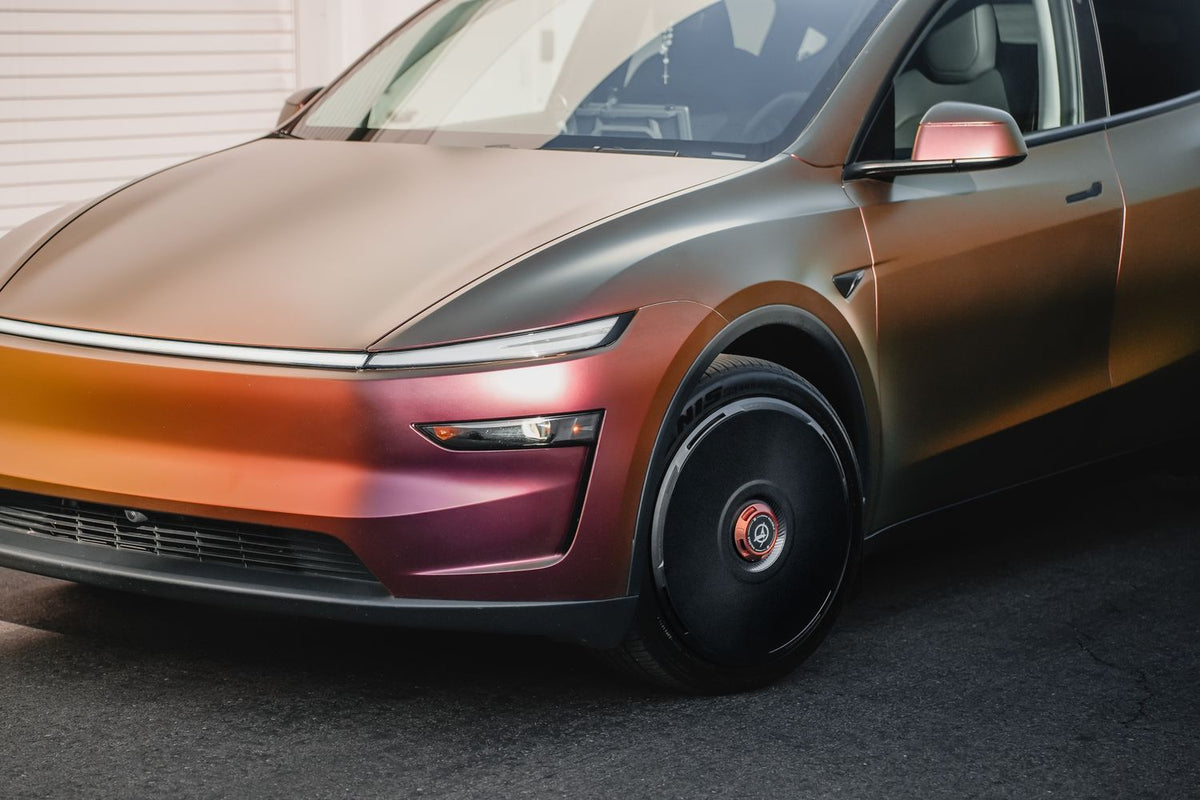
If you drive a Tesla and care about every mile of range, this question comes up sooner or later: do wheel covers actually make a difference, or are they mostly there for looks?
For many Tesla Model Y owners, the answer matters more than it might on a gas car. On an EV, small changes in aerodynamics, rolling resistance, and highway airflow can add up over time. That is why Tesla Model Y wheel covers are not just a visual accessory. In many cases, they are part of the vehicle’s efficiency strategy.
Still, plenty of owners remove their stock covers, swap to aftermarket options, or go with exposed wheels for a cleaner style. Some want better protection from curb rash. Some want a more premium appearance. Others just want to know whether changing their Tesla wheel covers will hurt vehicle efficiency in real driving.
The short answer is yes, aero wheel covers can affect both range and efficiency—but the size of the difference depends on how and where you drive. The bigger the role of highway speed, the more likely you are to notice it.
Let’s break it down in a practical way.
Why Tesla Uses Wheel Covers in the First Place
On the Tesla Model, the factory aero wheel setup is not random. Tesla uses aero covers, aero caps, and other streamlined designs because smooth airflow helps reduce drag. Less drag means the car uses less energy to push through the air, especially at higher speeds.
That is where vehicle efficiency comes in. Around town, the impact may feel small. On a longer trip or daily freeway commute, airflow around the whole wheel becomes more important. Open spokes can disturb the air more than a smoother wheel face. That is why aero wheel covers exist: to help the car stay more efficient.
Many drivers think of wheel covers as simple hubcaps, but on Tesla they play more of a performance role. They also give some protection against road grime, light contact, and normal wear that builds up over time.
Do Wheel Covers Really Improve Tesla Model Y Range?
In most cases, yes. Tesla Model Y wheel covers can help support better range, especially in highway driving.
The main reason is aerodynamics. When the wheel face is more open, the moving air becomes more turbulent around the tire and rim area. A smoother design reduces some of that drag. That does not mean you will suddenly gain huge mileage from a new set of covers, but it can create a measurable benefit over time.
At city speeds, the effect may be modest. At higher speed, it becomes more meaningful. If you are mostly driving in town, stopping often, and covering short distances, the change may be hard to feel. If you spend a lot of time on the highway, the effect is more likely to show up in your efficiency numbers.
That is why many owners who care about road-trip performance keep their stock covers installed. They want every possible gain from the car’s original design.
How Big Is the Difference?
This is the part most people want a straight answer on.
The difference is usually not massive, but it is real enough to matter for some drivers. If you mainly drive short local routes, you may barely notice it. If you regularly drive faster or take longer trips, the improvement from aero wheel covers can be more noticeable.
A lot depends on outside temperature, tire pressure, road conditions, traffic, driving style, and wheel design. That is why some people say the change is small, while others say they have clearly tested it and seen a drop in efficiency after removing their covers.
In other words, wheel covers are not magic—but they are also not just decoration. They can play a real role in how the car performs.
Stock Covers vs Exposed Wheels
Many Tesla owners remove the factory covers as soon as they get the car. Why? Mostly because they prefer the look of the exposed rims.
That is understandable. Exposed wheels can look cleaner, sportier, and more premium. Some people do not love the look of Tesla’s factory aero covers. Others feel the uncovered wheel design better matches the modern styling of the car.
But once the stock setup is removed, you are usually trading at least some aerodynamic advantage for appearance. This does not automatically make it a bad decision. It just means you should understand the tradeoff.
If style matters most to you, exposed wheels may still be the right move. If your priority is efficiency, the OEM-style covered design usually makes more sense.
What About Aftermarket Tesla Wheel Covers?
This is where things get more interesting.
Not all Tesla wheel covers are the same. Some aftermarket products are built mainly for style. Others are designed to mimic or improve on the factory aerodynamic shape. Some offer more edge coverage to help protect against curb rash. Some are simply a cheaper cosmetic replacement for damaged stock covers.
A good aftermarket set can be a smart middle ground. If made from the right material, with strong clips, solid fitment, and durable construction, it can give you a fresh appearance while still preserving much of the efficiency benefit. The best options are cost effective, easy to install, and built with durability in mind.
But quality matters. Poorly made covers can be loose, noisy, or even pop off if they do not fit correctly. That is why checking feedback, fitment details, and the brand’s website matters before buying.
Do Wheel Covers Affect Noise or Driving Feel?
Sometimes, yes—but not dramatically.
A well-made set of aero wheel covers should not create unusual noise if properly installed. If a cover is loose, low quality, or poorly matched to the wheel, you may hear vibration or movement. That is usually a fit issue, not proof that all covers are bad.
In normal conditions, the main effect is not cabin sound or ride comfort. It is airflow and, over time, efficiency. For most drivers, the car will feel basically the same. The bigger change is what happens in your energy usage over repeated drives.
Protection Matters Too
One reason some drivers stick with wheel covers has nothing to do with range at all: protection.
A cover can help protect the visible wheel surface from dirt, small debris, and everyday contact. It will not prevent every parking mistake, but it can offer a first layer between the edge of the wheel and potential damage. That matters if you are worried about curb rash, scratches, and general normal wear.
This is especially true on a daily driver that sees a lot of city parking. Repairing or refinishing rims costs money, and a damaged cover can be easier and cheaper to replace than a damaged wheel. In that sense, a cover can be both protective and cost effective.
Installation: Is It Difficult?
Usually not. Most Tesla Model Y wheel covers are super easy to fit or remove once you understand the process.
Many sets snap into place using built-in clips, and some kits also include matching lug nut covers, a center cap, or extra caps for a more finished appearance. If you are switching from exposed wheels back to covers, the process is generally simple and does not require many tools.
A careful install matters, though. If the cover is not seated correctly around the middle of the wheel or near the edge, it may not sit securely. Good fitment helps avoid rubbing, movement, and premature wear.
For many owners, this easy install is part of the appeal. You can change the look of the car without making a permanent modification.
OEM or Aftermarket: Which Is Better?
That depends on what you want.
If you want predictable fit, factory design logic, and the safest bet for aerodynamic performance, OEM or OEM-style stock covers are usually the better choice. They were designed around the original wheel and tire setup.
If you care more about style, fuller edge protection, or a more premium appearance, a good aftermarket option may be worth it. Many drivers are glad they switched because they got a look they liked better without giving up too much efficiency.
The key is not assuming every cover on sale is a good one. Some products are made from the same material quality as better options, and some are clearly not. A good company will usually be clear about fitment, manufacture standards, and design intent.
So, Should You Keep Your Tesla Model Y Wheel Covers On?
If you care most about range, long-distance performance, and staying close to Tesla’s intended aerodynamic setup, keeping your Tesla Model Y wheel covers on is the smart move.
If you care more about the exposed-wheel look, you may decide the small efficiency tradeoff is worth it. Plenty of owners do exactly that and are still happy with the result. For local driving, the real-world penalty may feel minor enough that appearance wins.
If you want a balance, a high-quality aftermarket replacement can be the best option. You get updated style, some protection, and a good chance of keeping much of the original aerodynamic benefit.
Final Thoughts
So, do wheel covers affect Tesla Model Y range or efficiency?
Yes, they do. The effect is usually tied to aerodynamics, and it becomes more relevant the more time you spend driving at higher speed. Factory-style aero wheel covers help the car stay more efficient, while uncovered wheels often give you better visual impact.
That does not mean everyone should keep the factory look forever. For some drivers, style matters more. For others, wheel protection and ease of replacement matter just as much as miles per charge.
The best choice comes down to how you drive, what you value, and what kind of ownership experience you want. If your goal is maximum efficiency, stick with well-designed aero covers. If your goal is appearance, you may be happy to trade a little aerodynamic help for a look you prefer.

Featured Tesla Upgrade
HALODISC 2 RTP – Black
From $219 $229
Give your Tesla a cleaner, more distinctive side profile while helping protect the original wheels from everyday curb rash and scratches. Select your Tesla model and wheel size below.
- ✓ Secure center-lock installation
- ✓ Full-rim curb rash protection
- ✓ Set of four wheel covers
- ✓ Fast US shipping on eligible fitments
Not compatible with the 2026 Model 3 Standard 18-inch Prismata, 2026 Model Y Juniper Standard 18-inch Aperture, or 2026 Model Y Juniper 21-inch Arachnid 2.0 wheels.


Leave a comment
All comments are moderated before being published.
This site is protected by hCaptcha and the hCaptcha Privacy Policy and Terms of Service apply.