
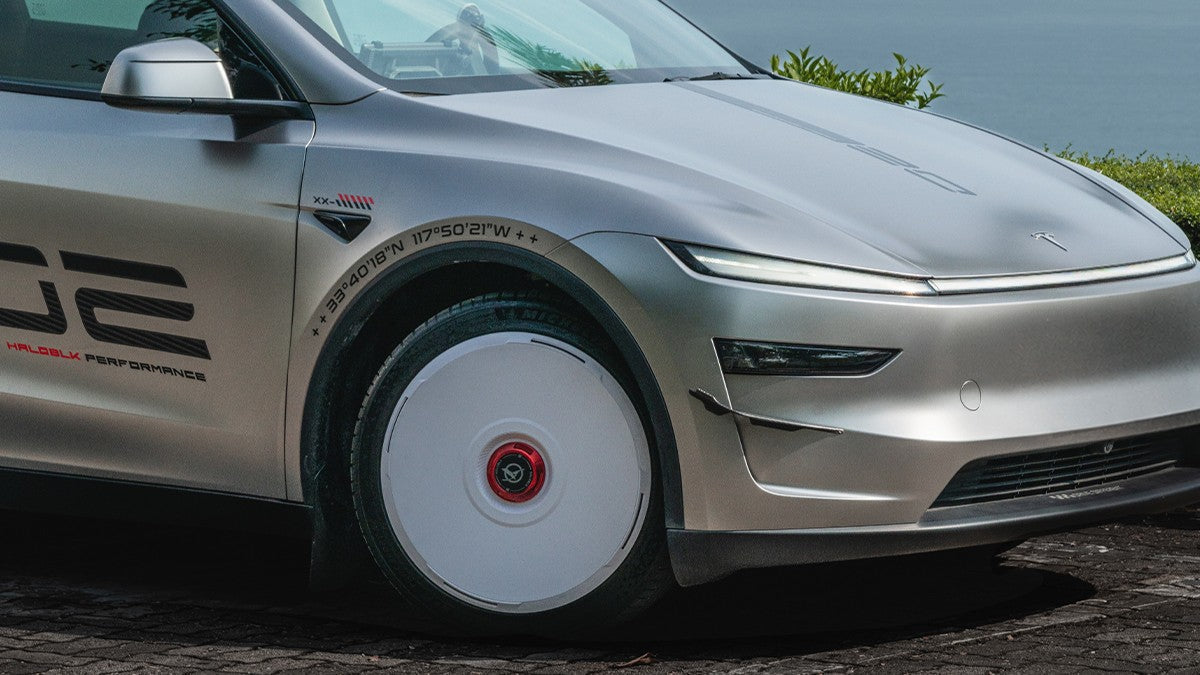
Tesla wheels are one of the first things people notice on a clean Model 3 or Model Y. Unfortunately, they are also one of the easiest parts of the car to damage.
A tight parking garage, a curb that sits slightly higher than expected, or one moment of misjudging the distance between the tire and sidewalk can leave a visible mark on the wheel rim.
For many Tesla owners, that first scrape is what starts the search for Tesla rim protection options.
The good news is that there are several ways to protect Tesla wheels, ranging from simple adhesive strips to rigid wheel rim protector systems and full-coverage wheel covers.
The better question is not simply, “Do rim protectors work?”
It is:
Which type of rim protection makes the most sense for the way you drive your Tesla?
Let’s compare the main options.
Why Tesla Wheels Are So Prone to Curb Rash
Tesla owners face a particular challenge with curb rash because many Tesla wheel and tire combinations use a relatively wide wheel with a low-profile tire.
On many setups, there is not much rubber extending beyond the rim edge.
That means when the wheel gets too close to a curb, the curb may contact the wheel before the tire has a chance to absorb the impact.
During everyday driving, this can happen surprisingly easily.
Common situations include:
- parallel parking
- narrow parking garages
- drive-thru lanes
- apartment parking structures
- tight curbside spaces
- turning close to raised concrete
- city driving with limited parking room
Even a relatively light scrape can leave scratches on the wheel surface.
The damage can be especially obvious on machine polished alloy wheels, painted wheels, diamond cut finishes, or a lacquered wheel surface.
On darker finishes such as matte black or carbon grey, exposed metal underneath the finish may make scratches even more noticeable.
That is why preventing Tesla wheel damage before it happens can be much easier than trying to make a damaged wheel look new again.
Quick Comparison of Tesla Rim Protection Options
There are three main physical approaches to Tesla rim protection.
|
Protection Type |
Main Benefit |
Installation |
Protection Area |
Best For |
|---|---|---|---|---|
|
Adhesive rim protector |
Simple and affordable |
Easy DIY |
Rim edge |
Light curb contact |
|
Rigid rim protector |
Stronger physical barrier |
Moderate / professional installation may be required |
Rim edge |
Frequent city parking |
|
Full wheel cover |
Protection + visual upgrade |
Easy when correctly fitted |
Larger wheel surface |
Style and protection together |
There are also financial solutions such as wheel and tire protection plans, plus professional wheel repair if damage occurs.
However, these solve a different problem.
A physical rim protector is designed to reduce damage before it happens.
Option 1: Adhesive Rim Protectors
An adhesive wheel rim protector is one of the simplest Tesla rim protection options.
These products are usually flexible strips that attach around the outer rim edge of the wheel.
Many are made from rubber, polymer, or high-quality polyurethane.
Polyurethane is popular because it can provide a useful combination of flexibility, abrasion resistance, and durability while maintaining a relatively clean appearance.
How Adhesive Rim Protectors Work
The strip creates a protective layer between the curb and your car's rims.
If the wheel makes light contact with a curb, the protector may absorb or deflect part of that contact before the curb reaches the painted or polished wheel underneath.
High-quality rim protectors can therefore help protect against:
- light curb rash
- parking scratches
- minor scuffs
- cosmetic rim damage
- scratches caused by low-speed curb contact
For many drivers, this is enough.
Easy Installation
One reason adhesive protectors are popular is easy installation.
Many Tesla rim protectors require no tools or technical knowledge.
The basic process is usually:
- Clean the wheel surface.
- Remove grease, wax, dust, and moisture.
- Dry the rim completely.
- Position the protector around the edge.
- Apply pressure evenly.
- Check the entire rim for loose sections.
The quality of the installation matters.
A protector applied over brake dust, wax, moisture, or an uneven surface may not bond correctly.
That can lead to incorrect fitting, premature lifting, or movement during normal use.
Advantages of Adhesive Rim Protection
The biggest benefit is simplicity.
For Tesla owners who want a basic barrier without changing the entire appearance of their wheels, adhesive protectors can be a practical solution.
They are also usually significantly cheaper than wheel replacement.
Depending on the product, protectors may be available in multiple colors.
A matte black option can blend into a dark wheel, while a matching grey protector may maintain a more factory-like appearance.
Color-matching rim protectors can also enhance the aesthetic appeal of Tesla wheels without making the protection look like an obvious add-on.
Limitations of Adhesive Rim Protectors
Adhesive protection works best for minor contact.
It should not be confused with ultimate protection against all types of wheel damage.
A thin flexible strip cannot prevent every impact.
Repeated exposure to:
- extreme heat
- cold or other damage
- moisture
- strong wheel cleaners
- road salt
- pressure washing
- repeated car wash cycles
can affect the protector over time.
Poor installation can also accelerate damage.
If water or contamination becomes trapped against a damaged lacquered wheel surface, moisture corrosion may eventually become a concern.
Regular inspection is therefore important.
Option 2: Rigid Wheel Rim Protectors
Rigid wheel protectors take a different approach.
Rather than sticking directly onto the visible wheel surface, a rigid protector is typically a stronger ring positioned around the interface between the tire and wheel rim.
These systems may use nylon, reinforced polymer, engineered plastic, or similar materials.
Some are manufactured from blended super tough nylon or another highly engineered material designed to handle repeated minor impacts.
The goal is to create a stronger physical barrier around the vulnerable rim edge.
Why Rigid Rim Protectors Can Offer More Protection
Because the protector is more physically integrated with the wheel and tire assembly, it may stay in place more securely than a basic adhesive strip.
When curb contact occurs, the protector takes the initial contact.
This can help reduce direct damage to the wheel.
For Tesla owners who regularly park in tight urban environments, stronger edge protection may provide more confidence.
You can ride knowing that there is an additional physical barrier between your expensive factory wheel and everyday parking hazards.
That does not mean damage is impossible.
It simply means the protector is designed to absorb some of the impact first.
Professional Installation May Be Required
Installation is one of the biggest differences between adhesive and rigid protectors.
Professional installation may be required for certain rim protectors designed to fit between the tire and wheel.
Some systems use joining clips, fixed mounting positions, or a three point positioning method to align the protection ring correctly.
Depending on the design, instructions may refer to a first fixed point, second position, third grid fixed point, grid fixed point, or remaining buckle positions.
Other installation instructions may ask the installer to move from one position to the next, leave then two spaces, continue to a fourth space, and first press specific locking sections into position.
These procedures vary by product.
They should not be assumed to apply to every Tesla rim protector.
The important point is that rigid systems depend heavily on correct positioning.
Incorrect fitment can reduce protection and potentially create another problem.
Always follow the correct installation instructions for the specific protector and wheel setup.
Material Quality Matters
Not every rigid protector is made the same way.
When comparing products, look at:
- nylon quality
- polymer construction
- heat resistance
- impact resistance
- joining clips
- attachment design
- material certifications
- replacement-part availability
Some products may use a reinforced nylon matrix or advertise matrix nylon certifications.
Others may use joining clips stainless steel hardware or other reinforced connection systems.
What matters is whether the design is compatible with your specific wheel and tire combination.
A stronger material does not automatically mean a better wheel rim protector if the fitment is poor.
Can Rigid Rim Protectors Prevent Pothole Damage?
This is where expectations need to stay realistic.
A rim protector can help absorb curb hits, but it cannot guarantee protection against severe pothole damage.
A deep pothole creates a much larger impact than gently rubbing against a curb while parking.
The force can travel through the tire directly into:
- the wheel
- suspension components
- tire sidewall
- wheel bearing
- alignment
A protector may reduce some curb and pothole damage around the edge, but it cannot prevent deeper structural damage if the impact is strong enough.
That distinction matters.
High-quality protectors offer protection against minor impacts.
They do not offer ultimate protection against every road hazard.
Option 3: Full-Coverage Tesla Wheel Protection
For some Tesla owners, protecting only the rim edge does not go far enough.
They want to protect more of the wheel while also changing its appearance.
That is where a full wheel cover becomes interesting.
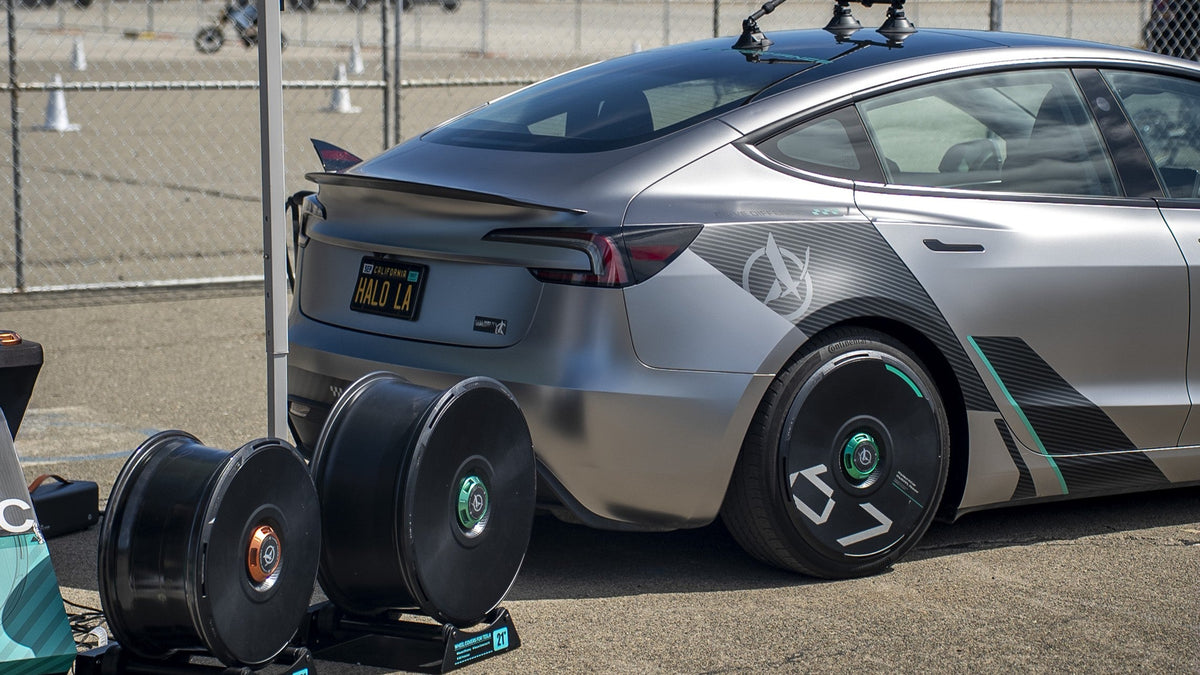
Instead of placing a narrow protective strip around the outside of the rim, a full-coverage wheel cover shields a much larger section of the factory wheel.
That can provide additional protection against:
- curb rash
- surface scratches
- parking scuffs
- minor road debris
- cosmetic damage
- everyday wheel wear
At the same time, the design can completely change how the Tesla looks.
HALOBLK HALODISC 2 RTP: Rim Protection Meets a Wheel Upgrade
The HALOBLK HALODISC 2 RTP takes the full-coverage approach.
Rather than treating rim protection as a small piece attached to the edge of the wheel, RTP combines protection with a more dramatic exterior upgrade.
The goal is simple:
Help protect your Tesla wheels while giving them a more performance-inspired appearance without replacing the original wheels.
That makes RTP especially relevant for Tesla owners who like sportier wheel designs or the look associated with Überturbine wheels, but do not want to replace an entire set of factory wheels and tires.
Why Full Wheel Coverage Can Make Sense
A traditional rim protector mainly covers the outside edge.
A full wheel cover can shield a much larger portion of the OEM wheel.
For a Tesla owner worried about scratches, that wider coverage can be useful.
It also solves another common problem.
Many owners want their Model 3 or Model Y to look different from every other Tesla in the parking lot.
Replacing all four wheels is one option, but it can become expensive.
A full wheel cover provides a different route.
You keep the original wheels underneath while changing what people see.
For many owners, that is the perfect solution between protecting the vehicle and customizing it.
Designed Around Tesla Fitment
Correct fitment matters for any Tesla wheel accessory.
A product that simply says “fits Tesla” is not enough.
Different Tesla models can use different:
- wheel sizes
- factory wheel designs
- model years
- generations
- tire profiles
- center attachment designs
A specifically designed cover should match the intended Tesla model and wheel configuration.
That is especially important for newer Model Y configurations.
Before ordering any full wheel cover, confirm:
- Tesla model
- model year
- wheel size
- factory wheel design
- correct product version
The goal is to avoid incorrect fitment before installation begins.
How HALOBLK RTP Differs From a Basic Rim Protector
A basic rim guard mainly exists to protect the edge.
RTP is intended to do more.
1. More visual coverage
The cover changes the entire wheel appearance instead of adding a thin strip around the rim.
2. More cosmetic protection
More of the original wheel sits behind the cover.
3. Easy wheel upgrade
Owners can change the appearance without purchasing a full set of aftermarket wheels.
4. Factory wheels stay underneath
The original Tesla wheels remain installed.
5. Style and protection work together
Instead of choosing between appearance and protection, you get both from a single accessory.
That combination is particularly attractive for new Tesla owners who want one of their first modifications to be functional as well as visual.
Tesla Rim Protection and Repair Costs
Protection makes more sense when you compare it with the potential cost of doing nothing.
Minor curb rash may be repairable.
Depending on the damage and finish, professional rim repair can cost around $150 per wheel in some situations.
The process may involve:
- sanding
- filling
- polishing
- painting
- refinishing
- clear coating
For more complicated finishes such as machine polished alloy wheels or diamond cut wheels, repair may require more specialized work.
Professional rim repair is recommended for significant damage.
What If the Wheel Needs Replacement?
Replacement becomes much more expensive.
Depending on the wheel, vehicle configuration, and number of damaged wheels, replacing scratched Tesla wheels can potentially cost thousands of dollars.
Some replacement scenarios may reach approximately $4,750 when several expensive wheels are involved.
This does not mean every rim protector automatically “saves $4,750.”
It means preventative rim protection can cost substantially less than replacing multiple damaged wheels.
In that sense, investing in a protector may help prevent financial losses associated with avoidable curb rash.
Can Rim Protectors Help Maintain Tesla Resale Value?
Vehicle condition matters when it comes time to sell or trade in a car.
Buyers notice damaged wheels.
Four clean wheels can make a vehicle feel well maintained, while heavily scratched rims immediately suggest wear.
Rim protection can therefore contribute indirectly to resale value by helping maintain the visual condition of the car.
This is particularly relevant for:
- leased Teslas
- newer vehicles
- low-mileage vehicles
- enthusiast-owned cars
- owners planning to sell within a few years
Keeping the wheels clean and protected is a small detail that can improve the overall presentation of the car.
Can Rim Protection Hide Existing Damage?
Sometimes.
Certain protectors can cover existing cosmetic scratches along the rim edge.
Full wheel covers can go further by hiding a larger portion of the factory wheel underneath.
That may improve the appearance of a Tesla that already has minor cosmetic damage.
However, protection should never be used to hide a serious wheel problem.
If you notice:
- cracks
- air leakage
- wheel vibration
- a visibly bent rim
- severe tire damage
- unusually deep gouges
have the wheel professionally inspected.
When serious damage occurs, cosmetic coverage is not a substitute for repair.
Wheel and Tire Protection Plans vs Rim Protection
Wheel and tire protection plans can also provide financial protection, but they solve a different problem.
Many plans are designed to cover structural wheel or tire damage caused by road hazards.
Cosmetic curb rash, however, may be excluded.
That means a plan may help if a pothole bends a wheel while offering little or no coverage for the long scrape created during parallel parking.
Physical wheel protectors work from the opposite direction.
They try to reduce certain types of minor damage before you need to make a claim or schedule a repair.
For some owners, using physical protection alongside an appropriate vehicle protection plan provides broader peace of mind.
Rim Protector Materials Compared
Material has a major impact on durability.
Polyurethane
High-quality polyurethane is flexible, durable, and commonly used for adhesive rim protection.
It can conform closely to the shape of the wheel while providing a barrier against light contact.
Rubber
Rubber is inexpensive and flexible.
It works well for light protection but may wear more quickly depending on weather and driving conditions.
Nylon
Nylon is commonly associated with stronger rigid designs.
A blended super tough nylon structure can provide higher resistance to repeated minor impacts.
Engineered Plastic
A highly engineered polymer can balance rigidity, flexibility, weight, and impact resistance.
Aluminum
Aluminum protectors can feel strong and premium, but their behavior during an impact depends heavily on the overall design.
Material alone does not determine protection.
Fitment, thickness, geometry, mounting method, and installation quality are equally important.
What Can Damage a Rim Protector?
No rim protection system lasts forever.
Common sources of wear include:
- repeated curb impacts
- extreme heat
- winter temperatures
- road salt
- cleaning chemicals
- automatic car washes
- incorrect installation
- tire servicing
- improper removal
- impact from potholes
A fault created by incorrect installation should also be distinguished from a problem caused by faulty manufacture.
That distinction can matter when reviewing warranty terms.
Before purchasing, check the manufacturer's care advice warranty information and understand what types of such damage are actually covered.
What Should You Check Before Buying?
Do not choose protection based only on the product photo.
A good Tesla rim protection buying checklist should include:
Fitment
Confirm your Tesla model, year, wheel design, and wheel diameter.
Material
Check whether the protector uses polyurethane, rubber, nylon, engineered polymer, or another material.
Installation
Find out whether installation is DIY-friendly or requires a professional.
Replacement parts
Look for information about clips, attachment pieces, and whether replacement components are available if one part becomes damaged.
Some sellers may offer replacement parts free under specific warranty conditions, while others may charge separately.
Always verify the actual policy.
Warranty
Understand whether coverage applies to faulty manufacture, normal wear, incorrect fitting, or impact damage.
Shipping
Before checkout, review the shipping fee, estimated delivery date, and return requirements.
Final checkout
Look at the total price, not just the initial product price.
If the store displays recommended add ons, make sure they are genuinely necessary for your installation.
Always use the correct fitment selector or check box before adding a Tesla-specific wheel product to the cart.
How to Care for Tesla Rim Protection
Installation is only the beginning.
Maintaining clean protectors helps preserve both their appearance and functionality.
Brake dust and road grime build up quickly around Tesla wheels, so basic cleaning matters.
During regular washing:
- Use automotive-safe soap.
- Avoid aggressive solvents.
- Rinse away brake dust.
- Check edges and mounting points.
- Inspect for movement or damage.
- Clean the wheel underneath when practical.
After a car wash, inspect adhesive edges or mounting points before driving at highway speed.
This is especially useful if the vehicle has recently experienced extreme heat, very cold temperatures, or heavy rain.
Which Tesla Rim Protection Option Is Right for You?
The best solution depends on your priorities.
Choose an adhesive rim protector if:
You mainly want inexpensive protection around the rim edge.
It can be ideal for light curb contact and owners who want a minimal visual change.
Choose a rigid rim protector if:
You want a stronger physical barrier around the wheel edge and are comfortable with a more involved installation.
Professional installation may be worth considering.
Choose a full wheel cover if:
You want broader wheel protection and a visible style upgrade at the same time.
For Tesla owners who want both, this is where the HALOBLK HALODISC 2 RTP becomes especially relevant.
Why RTP Makes Sense for Many Model Y Owners
The Model Y is used in almost every type of driving environment.
Some owners commute long distances.
Others spend most of their time navigating city streets and parking garages.
In both situations, keeping the wheels looking clean can be difficult.
RTP offers another way to approach the problem.
Instead of buying a rim strip and then separately thinking about how to improve the appearance of the wheels, a full-coverage wheel design addresses both needs at once.
You keep your OEM wheels, gain additional cosmetic coverage, and change the visual character of the car.
For a new Model Y owner, that can make RTP one of the easiest exterior upgrades to understand:
protect what you already have while making it look better.
Tesla Rim Protection FAQ
Do Tesla rim protectors actually work?
Yes, high-quality rim protectors can provide a physical barrier that absorbs or deflects minor curb contact. They can reduce certain scratches and cosmetic damage but cannot guarantee that your wheels will never be damaged.
Do rim protectors prevent pothole damage?
Not completely.
Rim protectors absorb curb hits, but they will not necessarily prevent deeper structural wheel damage from severe potholes.
A strong pothole impact can still bend or crack the wheel.
Why do Tesla wheels get curb rash so easily?
Wide wheel designs combined with low-profile tires can leave the rim edge relatively exposed.
That makes it easier for the wheel to contact a curb while parking.
Are Tesla rim protectors made from polyurethane?
Many adhesive Tesla rim protectors use high-quality polyurethane because it is flexible and durable.
Rigid systems may use nylon or engineered plastic instead.
Do rim protectors require professional installation?
It depends on the design.

Featured Tesla Upgrade
HALODISC 2 RTP – Black
From $219 $229
Give your Tesla a cleaner, more distinctive side profile while helping protect the original wheels from everyday curb rash and scratches. Select your Tesla model and wheel size below.
- ✓ Secure center-lock installation
- ✓ Full-rim curb rash protection
- ✓ Set of four wheel covers
- ✓ Fast US shipping on eligible fitments
Not compatible with the 2026 Model 3 Standard 18-inch Prismata, 2026 Model Y Juniper Standard 18-inch Aperture, or 2026 Model Y Juniper 21-inch Arachnid 2.0 wheels.

댓글 남기기
모든 댓글은 게시 전 검토됩니다.
이 사이트는 hCaptcha에 의해 보호되며, hCaptcha의 개인 정보 보호 정책 과 서비스 약관 이 적용됩니다.