
The story of how HALOBLK began

I went to Detroit because I wanted to design cars.
Not accessories. Not little details that most people barely notice. Cars.
I'd been drawing them since high school. I loved their proportions, the way a single body line could make a car look like it was moving even when it was standing still.
In Detroit, my sketches covered the walls. My desk wasn't much better. I could spend hours thinking about the shape of a roofline, the way a wheel sat beneath a fender, or why the smallest change could make an entire car look different.
My first car was a 2016 Ford Mustang. For years, I dreamed of owning a BMW G82.
I thought I'd spend my life chasing the next great car. And hopefully, designing one.

But over time, something began to change.
Like many Tesla owners, I watched driver-assistance technology evolve. From Autopilot to Enhanced Autopilot, and eventually through different generations of FSD, I went from being skeptical to genuinely fascinated by what was becoming possible.
It didn't make me love cars any less. But it made me think differently about what we might value in them.
If technology was going to change the experience of driving, what would make a car feel personal?

Spend some time in a California parking lot and you'll see why I kept thinking about this.
Rows of Model 3s. Model Ys in the same familiar colors. Some of the most interesting automotive technology in the world, sitting in cars that often look almost identical.
There's nothing wrong with that. It's part of what makes Tesla remarkable. But I couldn't help noticing the contrast.
We put so much thought into making other things our own. The clothes we wear, the shoes we choose, even the case on our phones.
We don't replace our phones every time we want a different look.
Yet changing the appearance of a car can mean buying an expensive set of wheels, finding someone to install them, and replacing parts that were perfectly fine to begin with.
That seemed like a lot of trouble just to make something look different.

I've always thought wheels have an enormous influence on a car's appearance. You can change almost nothing else, and a different wheel design will make the entire car feel different.
It's a little like changing shoes.
The same outfit can look completely different depending on what's on your feet. And most of us don't think twice about having more than one pair.
I wondered why changing the look of a car couldn't be just as straightforward.
What if you could keep the wheels you already had, but change their appearance whenever you wanted?
I started looking at wheel covers differently.
Instead of treating them as an accessory, I wanted to approach them with the same attention I'd always given to automotive design. The proportions, the surfaces, how the design worked with the rest of the car.
And it had to make sense beyond a drawing. It needed to fit properly, stay secure, and work for people who actually drove their cars every day.
Designing something that looked good was one thing. Making it work on a real car was another.
That idea eventually became HALODISC.
And HALOBLK grew from there.

The idea was to keep the original wheels and change what people saw. Turning that into something someone could actually install was another matter.
We started with compatible factory wheels and developed a dedicated center-lock system to secure the cover through the wheel's center, rather than relying on perimeter clips alone.
No drilling, no permanent modification. The goal was an installation that was deliberate, removable, and manageable for someone at home.

Then there was the outer edge. Anyone who's parked a car on a crowded city street knows how easily a curb can mark a wheel. We gave HALODISC coverage around the rim to help protect against minor everyday contact. It isn't armor, and we never intended to describe it that way.
Airflow mattered too. A wheel moves through turbulent air, particularly at highway speeds. We explored the closed-disc shape using computational fluid dynamics, looking at how design changes might influence the air moving around the wheel.
That doesn't mean every Tesla will see the same efficiency improvement. Vehicle configuration, speed, tires, weather, and driving conditions all affect the result. For us, the important part was considering aerodynamics while the product was being designed, rather than treating it as a claim to add later.

There was also a less technical question: what happens when you get tired of the look you chose?
I liked the idea that personalizing a car didn't have to be a one-time decision. Interchangeable center caps, different finishes, graphics, and custom numbers gave owners room to make another choice without starting over with an entirely new wheel.
Someone might want a clean black setup today and something more noticeable later. It doesn't need a complicated explanation.

Once HALODISC was on real cars, we began hearing things we couldn't learn from a rendering: what felt easy during installation, what people struggled with, and what they wanted us to change.
One Model Y owner told us their previous covers had rattled and come loose. With HALODISC 2, what stood out to them was how solid and quiet the setup felt. They were already thinking about different center caps.
Another owner described finishing the installation in about 25 minutes and getting compliments on the result. Others checked back in weeks later, still pleased with the change.
These may sound like small things, but they're the details we pay attention to. A product needs to make sense after the photographs have been taken and the excitement of opening the box has worn off.

Two years into HALOBLK, what I enjoy most is still seeing what people do with the designs.
A Model Y in a simple, understated finish. A Model 3 with a bold graphic. Custom numbers that probably mean something to the person driving, even if nobody else knows what.
I still look twice when I spot HALODISC on a Tesla out on the road. It's a strange feeling to see something that once existed on a screen or a drawing sheet become part of a stranger's daily drive.
And I like that the final decision isn't mine anymore. We can draw the shape, test the fit, and think through the engineering. Owners decide what the design means on their cars.
We've learned plenty from the questions, suggestions, and criticism people have shared with us, too. That's part of the work, and it doesn't stop once someone opens the box.
I still love great car design. I still understand the excitement of dreaming about the next car. But I've come to appreciate the excitement of seeing a familiar one differently.
That's why we started HALOBLK.
You don't need a different car to feel different about yours.
HALOBLK — DRIVE DIFFERENT.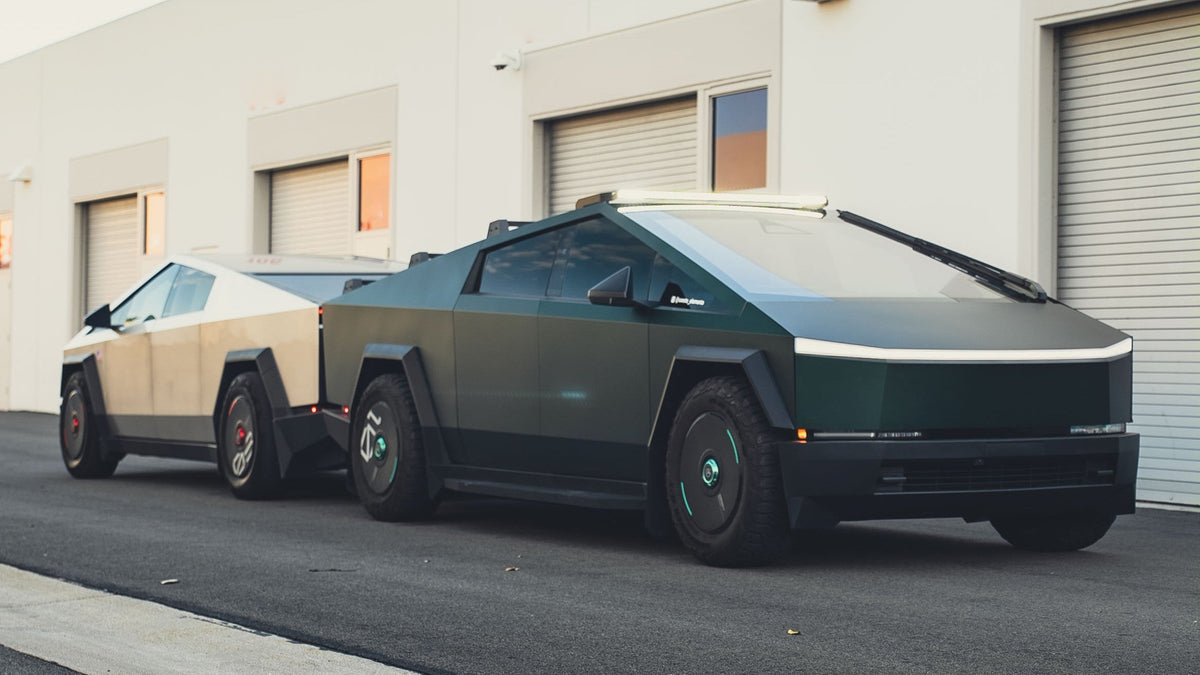

댓글 남기기
모든 댓글은 게시 전 검토됩니다.
이 사이트는 hCaptcha에 의해 보호되며, hCaptcha의 개인 정보 보호 정책 과 서비스 약관 이 적용됩니다.