
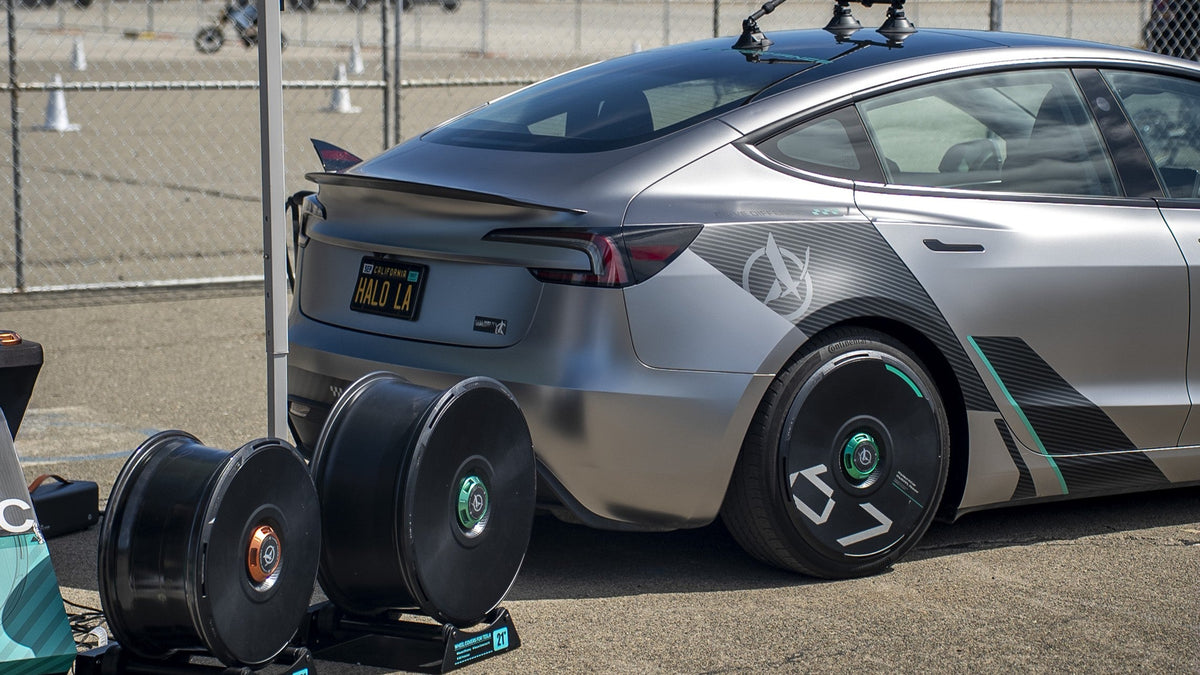
If you are curious whether wheel cover aerodynamics at high speed really matter, the short answer is yes. Speed changes the value of an aero wheel cover because aerodynamic drag rises quickly as a vehicle moves faster.
Around town, traffic, tires, vehicle weight, electronics, and frequent acceleration can dominate energy consumption. In that environment, aerodynamics still matter, but other things can mask the benefit of aero covers.
At highway speed, air resistance becomes a much bigger part of total drag.
That is why a smooth wheel cover can make a larger difference on a long road drive than when the car is parked or moving through slow traffic. For the average vehicle, highway aerodynamics become part of the range conversation much faster than most drivers guess.
The idea is fairly simple: reduce drag around the wheel, control airflow, and make the car spend less power pushing air aside.
Why Speed Makes Wheel Aerodynamics More Important
Aerodynamic drag increases with the square of speed. In practical terms, a vehicle at highway speed is pushing through much more air than the same vehicle moving slowly.
The drag coefficient, wheel design, mirrors, roof rack, tires, and body shape all contribute to the associated drag the vehicle must overcome.
A wheel is especially interesting because it rotates inside a complicated pocket of air.
Open spokes, the tire shoulder, the rim, the brakes, and the rear edge of the wheel well can all disturb airflow. As speed rises, these small disturbances become more important.
A smoother aero cover can fully cover much of the open wheel face. That can reduce flow separation, calm turbulent air, and create a more controlled wake around the front and rear wheels.
The result is not magic. It is simply a cleaner aerodynamic surface that can reduce drag without changing the entire wheel.
For many drivers, the biggest benefit appears during steady highway driving, where the car spends a long time fighting aerodynamic drag. This is the basic reason wheel aerodynamics deserve more attention as speed increases.
How Much Efficiency Can Aero Covers Add?
Aerodynamic wheel covers can improve efficiency by roughly 1% to 3% in many driving conditions, while highway-focused results may reach around 2% to 4%.
Some tests report highway energy consumption reductions of approximately 3% to 7% with aero covers.
Those numbers should be treated as a range, not a guarantee.
Aero covers are only one part of vehicle aerodynamics, and covers cannot cancel poor tire pressure or aggressive speed. Wind, road surface, tire pressure, tire type, traffic, temperature, wheel design, and driving style can all affect the result.
A different set of tires or a strong crosswind can change the test enough to make one run look better than another.
HALOBLK's HALODISC 2 follows the same aerodynamic idea: creating a smoother wheel face to reduce turbulence around the wheel. In other words, the wheel cover is not only about appearance; it also functions as an aerodynamics component.
Under specific testing conditions, HALODISC 2 claims up to 10% drag reduction.
That does not mean every driver will achieve a 10% increase in vehicle range. The final difference remains dependent on speed, wind, tires, road conditions, and the vehicle itself.
For a range-conscious driver, the more useful question is whether the covers can reduce energy consumption on the road you actually drive.
That is the point of a real-world test: compare the covers on your own car instead of treating laboratory aerodynamics as a fixed promise.
What Happens to Air Around an Open Wheel?
When a car is parked, spokes are mostly an appearance choice.
At speed, those same spokes interact with fast-moving air.
Air hits the wheel, moves through the spokes, reaches the brakes and suspension, then exits in a messy pattern. Covers change how much air can enter this area, which is why different covers can produce different results.
Some air separates from the surface and creates vortices. Some gets pushed outward by the rotating wheel.
All this adds drag.
A smooth wheel cover gives the air fewer openings to enter. In basic terms, covers smooth the outer face while open hubcaps leave more of the wheel exposed.
Instead of repeatedly colliding with spokes and internal wheel surfaces, airflow can remain smoother across the wheel face.
This is why aerodynamic engineering often focuses on details that seem small when the vehicle is parked.
Mirrors, underbody panels, roof rack shapes, rims, tires, wheel arches, and rear body surfaces can all influence total drag, efficiency, wind noise, vehicle range, and how smooth the airflow remains around the vehicle.
All this is part of aerodynamics, even if the driver only notices the number on the energy screen.
The rear wheels are particularly interesting because air reaching the rear has already been disturbed by the front of the vehicle. The same principle applies to rims and other things sitting directly in fast airflow.
Keeping the wheel-well wake under better control can help airflow around the rear remain cleaner.
HALODISC 2 Custom Numbers: Aero With a Personal Reason to Install It
An aero wheel cover does not have to look like a piece of generic efficiency gear, and aero covers do not have to make every car look the same.
That is where HALODISC 2 Custom Numbers - Black becomes interesting.
Instead of buying a standard set of hubcaps, drivers can select a personalized number, with that visual identity appearing on both rear wheels while the front covers remain clean.
The rear covers become the visual signature while the overall wheel cover design remains aero-focused.
Your number could represent a lucky number, birth year, racing number, anniversary, personal milestone, or something only you understand.
Optional custom text can add another layer of meaning, so the covers feel connected to the car rather than added as an afterthought.
This matters because appearance is often what makes a driver want to install covers in the first place.
Efficiency may provide the engineering benefit, but personalization gives the wheel design a reason to feel like part of your vehicle.
Made for Your Tesla, Not Just Pulled From a Shelf
HALOBLK positions Custom Numbers as a made-for-you HALODISC set rather than simply a standard wheel cover with a number added.
This is also where production matters. Each personalized set follows a custom production process instead of being treated as generic off-the-shelf gear.
The product keeps the practical HALODISC idea at the center:
- personalized wheel design
- smooth aero-focused surface
- coverage for the rims
- Center Lock mounting
- protection against everyday scratches and curb contact
- an alternative to replacing the entire wheel
The center mechanism is designed to help keep the wheel cover centered and secure once mounted.
For drivers who want the car to look different without replacing the entire wheel, it is an easy way to combine appearance, aerodynamics, rim coverage, and cost control.
Compared with replacing wheels and tires together, covers can also be a more flexible way to change the vehicle without committing to the cost of a complete wheel package.
Brake Cooling Is the Trade-Off to Understand
There is one engineering point that should never be ignored: brake cooling.
Open-spoke wheels allow more air to reach the brakes, helping the brakes release heat. Closed covers trade some of that open airflow for improved aerodynamics.
During ordinary street driving, that may not create the same concern as performance driving, particularly because regenerative braking can reduce how often the friction brakes work hard.
But track driving, repeated hard braking, mountain descents, or very hot conditions are different.
When the brakes are already hot, restricted air can make cooling more important.
This is why modern performance aero technology is exploring more flexible ideas.
Active Aero Wheels, for example, can adapt between open and closed designs: a closed position can help reduce aerodynamic drag, while an open configuration can provide additional brake cooling when needed.
Research concepts suggest this technology may achieve drag reduction of up to 10% while still supporting demand-based cooling.
That balance is where aerodynamics, cooling technology, and brake engineering meet.
The goal should never be drag reduction at any cost.
For HALODISC 2, the practical point remains simple: it is designed for normal road use rather than racing or track use. Drivers should always follow the product's installation and speed guidance, especially before high speed driving.
Does Extra Weight Cancel the Aero Benefit?
A wheel cover adds extra weight, but generally far less than replacing an entire wheel with a new wheel and tire setup.
At constant highway speed, aerodynamic drag remains particularly important because the vehicle keeps using power to push through the air.
The extra weight of the cover has more influence during acceleration than during steady cruising.
Cost matters too, and it is easy to overlook.
A full wheel replacement can carry a much higher cost, while a wheel cover lets the owner change wheel appearance, add protection for the rims, and explore an aero benefit without buying new wheels.
Covers also let drivers return to an exposed-wheel look without replacing tires, electronics, or other hardware.
For many drivers, that cost difference is part of what makes aero covers interesting.
Fitment Matters More as Speed Goes Up
Good aerodynamics only works if the cover is mounted correctly.
At high speed, secure fitment becomes essential because airflow and vibration are both acting on the mounted cover.
The wheel cover needs to remain flat, centered, and secure.
HALODISC 2 uses a Center Lock System, while protective material around the center mounting area helps manage contact with the rims.
Before you install any cover, confirm the exact vehicle, wheel size, wheel design, and tires.
Looking ahead, checking fitment is one of the easiest ways to avoid problems before the covers ever reach highway speed.
It is also an easy way to avoid a common problem with poorly fitted hubcaps: a loose cover that moves, rattles, or fails to remain mounted at highway speed.
Generic hubcaps and aero covers can use very different mounting ideas, so fitment deserves as much attention as appearance.
Basically, good aerodynamics begins with a wheel cover that actually fits the vehicle.
The Best Test Is Your Own Highway Route
If you are curious about the real benefit, do not guess from one forum post or one short test.
Choose a familiar road. Keep tire pressure consistent. Use the same tires and a similar speed. Then compare energy consumption with and without the covers.
Testing the covers back-to-back gives the comparison more value.
Try to keep wind, temperature, traffic, battery conditions, and vehicle load as similar as possible. Record each test instead of relying on memory.
One test will not prove everything, but repeated test runs can show whether there is a meaningful difference for your car.
A useful test can be as simple as driving the same half of a road route in both directions and then repeating the test with the covers removed.
If you later post the result, include speed, wind, tires, temperature, and route so other drivers understand the context. A useful post should also explain whether the covers remained mounted for both directions of the test; a second post without that detail can create the wrong impression.
Aerodynamic wheel covers will not change the laws of physics or suddenly create huge range.
They are one piece of vehicle aerodynamics—not a replacement for good tires, sensible speed, or careful driving.
What covers can do is reduce some of the unnecessary turbulence created by exposed wheel surfaces, helping reduce drag around the vehicle.
As highway speed rises, that benefit becomes easier to understand because aerodynamics takes a larger share of the vehicle's power demand.
And if you are going to smooth airflow around the wheel anyway, the covers do not have to be anonymous. Good aerodynamics can still leave room for personality.
With HALODISC 2 Custom Numbers, the aero idea becomes personal: choose a number that means something to you, protect the rims, install the wheel covers correctly, and take the car back onto the road.
The most interesting number may not be the one printed on the rear wheels or in a social post. It may be the Wh/mi you see after the drive.
If that sounds like your kind of upgrade, create a HALODISC 2 Custom Number set around a number that actually means something to you—and see how it looks on your Tesla at highway speed.

Featured Tesla Upgrade
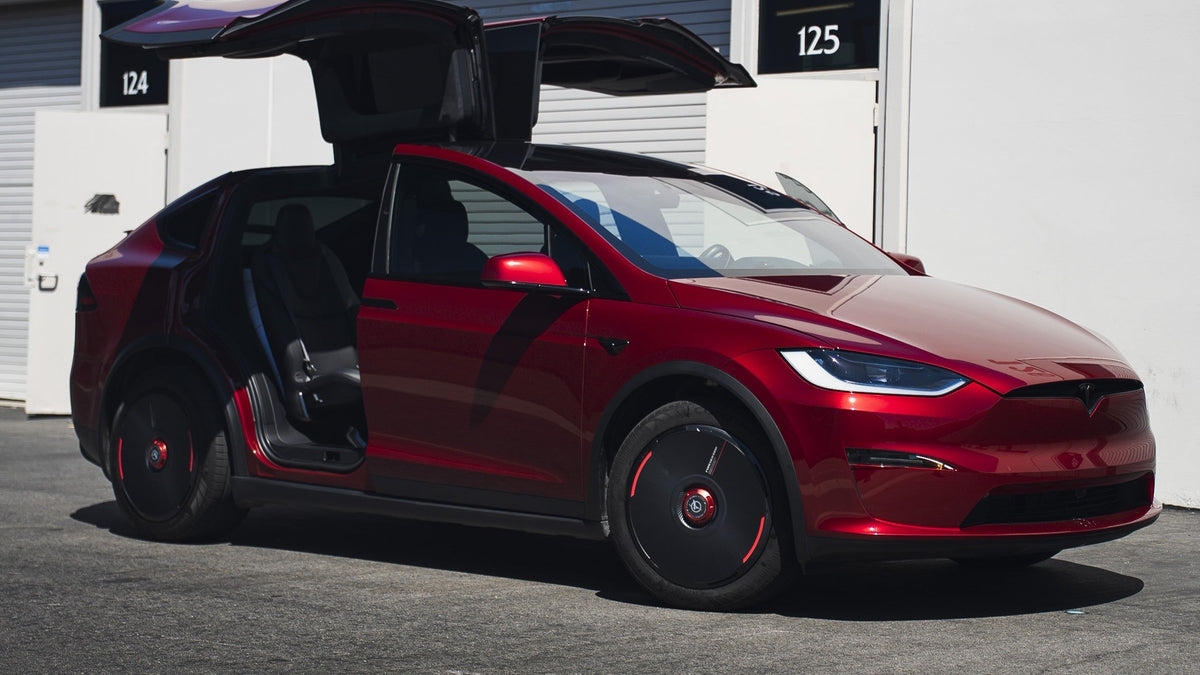
HALODISC 2 RTP – Black
From $219 $229
Give your Tesla a cleaner, more distinctive side profile while helping protect the original wheels from everyday curb rash and scratches. Select your Tesla model and wheel size below.
- ✓ Secure center-lock installation
- ✓ Full-rim curb rash protection
- ✓ Set of four wheel covers
- ✓ Fast US shipping on eligible fitments
Not compatible with the 2026 Model 3 Standard 18-inch Prismata, 2026 Model Y Juniper Standard 18-inch Aperture, or 2026 Model Y Juniper 21-inch Arachnid 2.0 wheels.

Leave a comment
All comments are moderated before being published.
This site is protected by hCaptcha and the hCaptcha Privacy Policy and Terms of Service apply.